USS MAURY AGS16
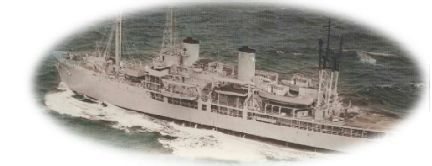
Thanks
for
the Memories
1945 - 1969
From Johnny Brown
When I first reported aboard in April 1964 we made a cruise to the Mainland and to Seattle for some surveying . In January 1965 we went to Balboa, Panama , then to Buenaventura, Columbia. On the trip back to Pearl Harbor we stopped in Acapulco, Mexico in June of 1965
During that cruise I served in number two fire room, upon reaching Pearl Harbor I was transferred to the soundboat shop. On our next cruise, we went to Viet Nam, that was in November 1965. I was assigned to sound boat 2 as the engineer. One of the best jobs in my life. I wish I could relive those days. We we returned to Pearl Harbor in June 1966. Other short cruises included all around the Hawaiian Islands and the Marshall Islands. The A.G.S. always stood up to its name..... Always going somewhere. I loved every mile of it.
If anyone else remembers me and our cruises, E-Mail me at GrumpyMack 697@msn .com

From John Bernard
I was aboard Maury when we went to the Black Sea in 1959. We were in the Black Sea approximately 7 days. We spent three days in Odessa, USSR. We were treated to parties at the Seamans Palace, Buffet lunches, and Variety shows. This was an experience that will not soon be forgotten by everyone aboard at that time.
From Terry Gann
My memory aboard Maury was my first Sea Detail. I was standing the throttle watch and we were prepairing to get underway for Viet Nam. I was manning the 1JV sound powered phone circuit and recieved a call from the Bridge to "Stand by to answer" all manuevering bells. Instead of answering Bridge, Main Cotrol wait one, I acknowledged them and said "Main Control Aye" we imediately got a bell. And the people in the engine rooms went nuts because they weren't ready. I can remember the look on the Engineering Officer, Lcdr Ken Tates face and the remark he made which I won't repeat. That little goof up cost me a night of extra duty cleaning the forward fan
room. Didn't take long to realize that I wouldn't make that mistake again
From Richard Fournier (Frenchie)
I served aboard Maury from October 1960 to October 1961 as a Boatswainsmate striker. My duties included being assigned to First Division under Chief White. I was assigned to the Boatswains Locker and during our 1960-1961 cruise was assigned to "Adrift 6" as "wheelsman". That was the best duty assignment I had during my stay in the Navy.
From Allen Lipscher
I was the Officer of the Deck and at the time a LT, when we passed through the "Storm" on our way back to Pearl Harbor from Yokosuka, Japan in 1967. I must have stood the OOD watch for about 8 hours or so. I watched the "eye" cross over the ship and watched the Air Search Radar blow off the mast. I was up there on the bridge when Captain Aubert busted his ribs on the chart table and had to be relieved. The XO as I recall was Roger Craig, a Tar Officer with no sea experience. I'll tell the whole story when I make the next re-union.
From Carlo Imelio
Although a homesick 18-year-old when I first boarded the Maury just before dawn, I came to love the"Old Bucket Of Bolts", as some of the crew referred to her. Our job was classified at the time and very secretive, we were to set up beach stations in the North and South Atlantic, ostensibly for the down-range flight of Astonaut Alan Shepard. All we knew was that we steamed and steamed and steamed. We had two tragedies aboard, although it was peace time: First we lost a crewman over the side while taking on fuel from the USS Truckee AO-147. Our chopper circled for a long time before giving up the search. Later our helocopter crashed landed on an island in the south Atlantic where we were setting up a tower/station. I believe there was five crewman who were killed. We immediatly headed back Stateside to Charleston, S.C., to return their remains. It was a scene I will never forget, that of watching the remains being returned to their loved ones on the dock. We never left the bodies during the voyage, with 24 hour watches over the area in which they were being held. Those tragedies aside, there were only rumors that we would be involved in the Suez Crisis, which I believe was in 1956. We never did go there. I loved my early job as a DC stricker in the Damage Control shop, but was transferred to the Dispersing Office, when it was learned that I could type. My DK-1 was, Al Baldwin, who made Chief during my hitch, and there was a DK-3 and me in the office. I won't boar you any longer with old tailes, other than to say that my 18 months or so aboard the Maury were greatly beneficial, exciting and adventuresome. And I expect that I am not alone.
From Gary Stock
I reported aboard Maury as an RDSN in November 1959 at the Brooklyn Navy Yard and served three years aboard. The Maury had just returned from a surveying trip to the Black sea and a visit to Odessa, USSR(the first US Navy ship to visit since 1944). Then some duty in the North Atlantic. Left New York in mid Feb, transitted the Panama Canal, and arrived in San Diego in early March. Left San Diego under a cloud (the base commander said we looked like a "Turkish Mechant Ship" and made a report to COMSERVPAC). Our rust etc. was understandable because of our service in the North Atlantic - didn't seem fair to compare us to the ships in the San Diego area. We steamed out at 15 knots for a couple of days and then proceeded, in mid ocean, to paint everything - sides included - that didn't move including the rust. COMSERVPAC came aboard after we arrived in Pearl. I am sure he had a few words for Captain Luther. Left Pearl in late March, stopped in Guam on April 5th (where someone at the Officers Club made a disparaging remark about Maury and her Mustang Officers which led to a confrontation with subsequent damage) and we were asked to leave Guam. Arrived in Bangkok the 3rd week in April . The time spent in our Pacific transit and in the Gulf of Siam was very difficult on the initial cruise because the ship had no air conditioning. Temperatures ranged daily in the high 90's and low 100's . Many slept on deck at night. Salt pills were required daily. Felt sorry for the guys in the engine rooms where temeratures were 120 and above. Had regular "repel boarders" drills because we were worried about pirates in the Gulf. Pulled out fire hoses, side arms, BARs and the 75MM recoiless rifle which was mounted on the roof of the radar transmitter room at the forward mast. Did some preliminary survey work - set up several LORAC stations on the beach to test out the surveying system. Encountered many problems with fish traps and fishermen when we surveyed at night. During the first three cruises we only hit this one fishing boat. Unfortunately the fisherman was killed. We paid the widow 33,500 Baht ($1600) as compensation. At that time, a college educated school teacher in Thailand made $50/month. Got our mail through the US Embassy on a weekly basis when our helicopter flew into Bangkok. Returned to Pearl Harbor in late June for extensive time in the yards - the Navy spent over a million dollars on our upgrade including a ship - wide installation of air conditioning.
We started the second cruise on November 1, 1960 under Captain Marshall(excellent officer). Stopped in Guam to drop off a crew member who had been operated on for appendicitis aboard ship. Then to Subic and on the Bangkok on the 26th. We seemed to enjoy the renovations (for example, the Navy spent $75,000 on upgrading the mess decks). Started our survey on Dec 4th off Ko Si Chang Island about 40 miles south of Bangkok. Erected our three beach stations (Beerfoam I,II, and III). Running east west lines from one side of the Gulf to the other, 275 yards apart. No mail until Hong Kong over Christmas. Some trouble occured in Loas just before we left for Hong Kong. Our helicopter left on a "mysterious " trip during the first cruise - was gone for three days. Saw the corpsman who left with the helicopter carrying a Thompson Submachine gun. I subsequently learned that they flew medical supplies into Laos and brought out some personnel. We were one of only a few Navy ships in Hong Kong because most of the 7th fleet was at sea because of a typhoon. It was nice not having to share Hong Kong with a bunch of other sailors. Mary Soo Side Cleaners did their thing while we were trading their services for our refuse. Left on the 2nd of January and stopped at Subic to pick up supplies and personnel for the USS Paul Revere an (APA) which was stationed off the tip of Vietnam with task group (carrier, LSD, ammunition ship, oiler and 4 destroyers) awaiting further trouble in Loas. Arrived in Sattahip on the 10th to begin survey operations again. Surveyed until trip to Subic for yard work and re-supply on the 13th of February. Back to the Gulf on the 17th - into Bangkok on the third of March. Surveyed out of Sattahip until the 29th of April. Subic on May 8th (over 50 ships in port because of Loas - had to anchor out since there was no pier space available). Left for Pearl on the 15th and pulled in on the 31st.
The third cruise started on October 2nd after a refit and extensive underway training. Captain McNulty was now in command(he liked to yell a lot on the Bridge). Sorry to see Captain Marshall leave - I was his driver while in port and got to know him and his wife quite well (I believe his next assignment was at the Naval War College). Arrived in Yokosuka on October 14th for a one week stay. Arrived in Bangkok on the 31st. Completed setting up the beach camps on the 14th - the last Ko Chang Island on the Thai Cambodian border. Lots of rain which increases the occurance of cobra sightings at the beach camps. One of my friends killed a cobra that was 8 feet long - shot it 7 times and finished off with a rock. He sent the head back to the ship. Returned to Bangkok on the 23rd of December. Left Bangkok after New Years for survey operations returning on the 24th for a visit from Crown Prince of Thailand on the 26th. Survey operations after the visit during which a small Thai Navy Ship came alongside with a Thai sailor with a broken back. Our helicopter flew the sailor to Sattahip(240 miles roundtrip). Went to Manilia for a visit on the 9th of Feb then to Subic a few days later. Returned to Ko Chang Island on March 2nd. Getting ready to travel to Singapore after which we will cross the equator. The ETs bugged the Chief's quarters where all the planning by the Shellbacks took place. On March 26th, some Pollywogs (our ship's doctor, some corpsmen and a couple other officers) kidnapped the chief corpsman and the chaplain, both important Shellbacks, and locked them in the isolation ward all night. The Captain and XO were shellbacks and punished the doctor and the corpsmen by having them do cocroach inspection on their hands and knees in the boiler room while wearing their dress uniforms. Two of the officers had to go up into the crows nest with a broom and sweep the horizon. Left the Gulf on the 3rd of April for Singapore. Left on the 9th. Recieved my summons to appear before the High Court of the Raging Main, was charged with being a scope dope and being a Bangkok liberty hound(very serious**). On the 10th of April, reville at 0530 for all Pollywogs. Uniform of the day was Scivey shirts and shorts and shower shoes or boon dockers.
We lost three crew members during my service on the Maury. One drowned at a beach party, one fell through an open hatch, and one radioman was electrocuted when he walked through two transmitters while doing our nightly scheds- the airconditioning was not working at the time and he was sweaty and electricity arched across his chest.
Here are some facts about the Maury as of 19 Jan 61:Personel - Officers - 32: enlisted - 361: Civilains - 6. Miles steamed on an average survey, 40,000. Fuel used on an average survey , 2.5 million gallons. Fresh water consumed each day - 20,000 gallons. Fuel consumed each hour - 500 gallons. Number of haircuts given biweekly by the ships barber - 110. Number of letters mailed daily - 175. Amount of soap sold in the ships store weekly - 500. Average monthly payroll - $45,000. Bread baked daily -75- loaves. Milk (canned sterilized)consumed daily - 65 gallons. Eggs consumed weekly - 210 dozen. Butter consumed weekly - 240 lbs. Beef consumed weekly - 800lbs. Ice cream consumed weekly(made in the ships soda fountain) - 150 gallons.
From LT. Morton A. Goldberg
I was ordered to the USS Maury in June 1962, originally for 2 years. Extended for a year. so ended up staying with her until July 1965. The way things worked out, I actually served under 5 skippers: McNulty, Brittin, Cook, Neff, and Reilly.
My first assignment was EMO -- Electronics Material Officer. Since I had a civilian experience as a broadcast engineer, that was a natural fit for me, so there I stayed until I became Operations Officer as a LT after Marshall Greer left. I kept that billet until the time I left in 1965, shortly after Capt. Reilly took command.
Another Version of the Typhoon of 1967
From Q.D. Stephen-Hassard
Our "Near Death" experience we had two days out of Yokosuka on our return to Pearl Habor after 9 months in Viet Nam(Sept 1967). My recollection of the "STORM" is still very vivid in my mind. We were at general quarters and the ship was rolling in the excess of 45 degrees. We had has several engine failures due to severe rolls causing air to be taken into our sea suction/cooling water which shut down the condensers and the main engines. Talk about dire straights. I was the OOD and had thought I'd be relieved by LT Graham, the deck dept. head at 1600. I had the 1200-1600 watch and Graham was my scheduled relief, but he was too busy securing our gear and I don't know what else. I was OOD some 10 hours straight, then relieved by LTJG Steve New for two hours before I had to take the mid-watch. The SN on the port bridge wing was SN Bishoff and he yelled at about, I'd say, 1600-1700hrs when the wind began to exceeed 100 knots that the (new) radar antenna had been carried away. It weighed about 150lbs and flew like a leaf. Up to about 1530 it had looked like I might get relieved before the storm hit, but the barometer on the bridge had gone off its strip chart (it was a recording barometer and the arm fell off when it reached the bottom of the chart) and we began to roll heavily. Before the radar got carried away, I could see about two thirds of the tyhoon's eye in the scope, then we lost it. Capt. Aubert headed the MAURY straight into the storm and he knew two days before, as we left Yokosuka where the storm was and that our heading/track would take us directly into it. Aubert was repeatedly was told by LT Al Herrlinger's recommendations to deviated south to avoid it, which were repeatedly denied by Capt. Aubert. The typhoon was a classic western Pacific tyhoon which followed the text book track up the east coast of Japan, so avoiding it would have been easy. As the situation worsened, Capt. Aubert came to the bridge and the helmsman was repeating the words that the "helm wasn't answering" at which point Capt. Aubert demanded a cup of coffee. I called his steward and to the absolute amazement of me and the bridge watch the steward soon appeared with a steaming cup of coffee (how he did it I'll never know, the way we were heaving about and the fact that we were on emergency power made coffee brewing at best difficult). Aubert took the cup of coffee and yelled at the helm to take a heading at which point I told the bridge, per Navy protocol "the captain has the bridge!" to which, to my shock, Aubert responded, "I DONOT!" At which point he put down his cup down on the bridge plotting table and it promptly tipped over on the deck!" making a large spill. Suddenly Aubert whirled around to give another command and he lost his footing, mercifully and cold cocked himself, breaking his ribs in the process. He was carried off the bridge to his cabin and he left us alone. Dr. Barnhouse, the MAURY physican confirmed the broken ribs. I believe Al Lipscher was on watch as OPS boss in CIC, but he was probably out on the bridge to see what was going on and gawk with the rest of us at the 50 foot waves. Talk about the perfect storm, this would definitely be a tale for the Weather Channel Storm Stories. Reyn DuBois told me atory from the engine room where he was on watch. He says they could tell the ship had, more than once, rolled past its point to capsize, but for what ever reason it did not. There are two reasons at least why it didn't capsize and these are that we were fully laden with fuel and two of our 32 ton sound boats had been left in Yokosuka for repair and possible use by our sister ship USS TANNER(AGS-15). The almighty probably had a hand in our salvation, too. I do not recall being frightened, nor were the others, we just did what we had been trained to do and then did what we could to meet the treacherous circumstances. Mercifully the storm passed quickly and by 220hrs it was pretty much history, at least the seas seemd calmer and we'd gotten headway again. I still see those mountainous seas and realize what a close call it really was. Aubert sent a flash message before he was hurt, asking for assistance, but I reacall all of us including Lipscher, who would have to send it out, that thinking, "who in the hell would come near us" (and that AFT, fleet tug, Aubert was trying to reach more than likely would have just tried to save itself, while laughing at us). Our rolls were such that I recall hanging onto the overhead and thinking that If I let go I'd fall through the bridge wing door into the foaming sea; we could read 45 degrees plus on the bridge inclinometer. We all had life jackets on, but I wonder now if they'd have done any good beyond giving the Navy a few bodies to recover. I should mention that LTJG Kirk Heilman was asked to to go on deck to pull the quick realeases to jettison the gasoline we carried on deck for the P1800 pumps and beach camp use. Kirk crawled out with alife line and got rid of the 55 gallon drums, I think per the Captains request. The gas wasn't much os a hazard in my opinion and what Kirk did was extremely dangerous in light of the boisterous seas and huge waves sweeping the deck. We lost all of our antennas and the ship was really scrubbed clean from the beating. Captain Aubert should have been court marshalled.
Article from the STARS AND STRIPES
November 2, 1959
By THURSTON MACAULEY, Staff Writer
Submitted By Chuck Schoen
USS MAURY AGS16 1958/1959
THE USS MAURY MAKES HISTORY IN THE BLACK SEA AND VISITS ODESSA, RUSSIA
AUTHOR JOSEPH CONRAD once wrote, "The sea never changes and its works, for all the talk of men, are wrapped in mystery". The U.S. Navy does not quite agree. The Navy holds that the sea is ever changing, not only its reefs and depths but also it physical boundries, the coastlines. In an age of modern warfare, knowledge of those changes can mean a great strategical advantage. That is why the Navy is continually exploring what lies beneath the surface of the world's waters. In an effort to solve the centuries old ocean mysteries and to keep pace with these changes, the Navy maintains special crews who might well be called detectives of the deep. These are the hydographers and oceanographers. One such crew is assigned to the USS Maury. Originally named the USS Renate, the Maury was converted to a hydrgraphic survey ship at Norfolk and was commissioned in 1946. It was outfitted with modern drafting room, a print shop, photo lab and a helicopter flight deck. The Maury first joined the Pacific Fleet to survey Truk Atoll. In 1948 it began the first of several deployments to the Persian Gulf area and since 1952 it had been conducting special projects, usually operating about eight months of the year from its home port of New York. The Maury just recently completed its most recent survey work in the eastern Mediterranean and Black Sea. Commanding officer of the Maury is Capt. Roger W. Luther, of Boston. The ship's hydrogapher is Lt. Comdr. Russell H. Sullivan, of Washington, D.C.. He is assisted by four officers, 20 enlisted men and eight scientists. Sullivan explained that waters around the U.S. and U.S. possessions are surveyed by Coast and Geodetic Survey while the Navy has responsibility of the rest of the world. "Our Navy surveys are done at the request or with the approval of foreign governments," Sullivan said. "In the Black Sea, we did limited oceanography, such as water temperatures, taking samples of plankton--floating animal life in the water--and studying light penetration. In our continuous soundings, the greatest depth we recorded there was 1,180 fathoms, (7,080 feet)," he said. The Maury's photogrammatists use the ship's helicopter for aerial photography in charting coasts, rocks and reefs. The ship carries an LCM boat to land trucks and smaller vehicles for shore parties. Upwards of 15,000 soundings are made on the Maury to complete an average survey chart. During its recent operations in the Black Sea the Maury paid a call to the Russian port of Odessa. "It was the first time since World War II that an American naval ship stopped at a Russian port, and the first in history at Odessa", Luther said. "For the men of the Maury it was the highlight of their seven-month cruise." "It was a truly wonderful visit," Luther said. "The Russians showed us great hospitality. It was an outstanding contribution to understanding and peaceful relations between our two peoples." Our officers and men were entertained ashore by men of the Russian Navy. In return we gave a dinner on the ship for the Russians and two parties for Russian children." "We also had a number of Russian officers and Hydrographers aboard Ship," oceanographer Sullivan said. "They showed great interest in our equipment and asked many questions." More than 1,500 Russians visited the Maury during its three-day stay in Odessa. Before going aboard they received a brochure, in Russian, giving them a brief history and description of the ship. The American sailors were enthusiastic about the visit. "The Russians were all outstandingly friendly to us," said Gerald Decker, aerographer's mate 2/C, from Philadelphia. "Besides two parties given for us at the Russian seamen's club, we walked freely around Odessa and met a lot of people." "Whereever we went people came up to greet us. In nearly every group there was at least someone who spoke English so we didn't need interpreters." "The prices were pretty steep there," said Dario Piccolomini, boatswain's mate 1C, Leominster, Mass. "For instance, in a restaurant I was charged $1.75 for a little piece of hamburger-type meat with an egg on it." One sailor from the Maury made history of his own by becoming the first American sailor known to re-up in the Soviet Union. R. W. Seaburg, machinist mate 2/C, signed up for another six-year hitch while the ship was in Odessa.
From Ensign Ron Hill
I went aboard the Maury as an Ensign(Disbursing Officer, S-1 Ass't. Div. Officer) in April 1969 just two days before deploying to Korea from Pearl Harbor for her last mission. I recieved my orders to another ship the night before we pulled back into Pearl Harbor in November. Although I served aboard 4 more deploying units to WESPAC during my career, the "Maury Maru" always holds a special place for me--I kinda teared up as she left for Mare Island! For those that served on the last deployment, you may be eligible for the new Korean Defense Service Medal that has just been announced by DOD (details forthcoming from SecNav).
From Gerald A. Dalferro
Some time in during the last cruise to South Korea(1969), we were confronted by the North Korean Navy. This was less than a year after they captured the Pueblo. We had a North Korean Destroyer off our stern with their 5" guns manned and pointing at us. We were lucky enough to have an Aircraft Carrier close at hand and they sent over a couple of fighter jets and that sent them packing. I have spoke to a High Level Communications Officer 30 years later and he said "that this Nation was ready to go to war on that one". Do any of you know anything about this situation?
From Jim Mason
"The waters around Vietnam were relatively uncharted and survey vessels were dispatched to conduct hydrographic operations. During these operations in May 1967, a sound boat from the USS Maury was hit by enemy fire and was sinking. The USCGC Point Kennedy WPB 82320 went along side to give damage control assistance and simultaneously suppressed enemy fire while extracting both craft from this precarious position." Captain Aubert and the CO of the Kennedy had some heated discussions. A crewman from the Kennedy went into the water with a mattress and saved the sound boat from sinking. Captain Aubert told them even though they didn't do a good job of protecting the boat that we were still going to provide them with ice cream. The CO of the Kennedy told Captain Aubert what he could do with his ice Cream. It got so bad that Comnavforce Vietnam had to intervene. The only person injured on the sound boat was sitting on the can when the shell hit and got a splinter in his butt.....
From the PATHFINDER Newspaper Vol.IV No. 1
USS MAURY (AGS16) May 1967
Contributed by Ltjg Dick Stephan-Hassard
SOUNDBOAT HIT BY VC !!
HIT BY HOSTILE FIRE USS MAURY (AGS-16) AT SEA, 13 MAY 1967. A 52 - FOOT 32 TON SOUND BOAT FROM THE HYDROGRAPHIC SURVEY SHIP, USS MAURY AGS-16. WAS TAKEN UNDER HOSTILE FIRE NEAR THE CO CHIEN RIVER ON 13 MAY WHILE CONDUCTING CLOSE - INSHORE SURVEYING. STRUCK BELOW THE WATERLINE BY THE FIRST OF SEVERAL 57MM RECOILESS RIFLESHOTS. tHE SOUNDBOAT CREW IMMEDIATELY RETURNED FIRE WITH 50 CAL/MM. AS DID THE FIRE - SUPPORT ESCORT WPB KENNEDY WITH BOTH 50 CAL/MM AND 81 MM HIGH EXPLOSIVES. SOUNDBOAT OFFICER IN CHARGE LTJG PHIL LAMBERSON OF WARREN , OREGON ORDERED HIS SOUNDBOAT TO CLEAR THE AREA TO SEAWARD AND THE CREWMAEN BEGAN IMEDIATE DAMAGE CONTROL EFFEORTS TO PLUG THE STARBOARD BULKHEAD OF THE FORWARD BERTHING COMPARTMENT WHICH WAS FLOODING RAPIDLY FROM A 15 BY 20 INCH HOLE AT THE WATER LINE AND SEVERAL 3 INCH FRAGMENT HOLES BELOW THE WATER LINE. DESPITE THEIR EFFORTS TO STOP THE FLOODING, WATER POURED INTO THE SOUNDBOAT AT A RATE OF 400 - 500 GALS PER MINUTE. fASTER THATN THE BOAT PUMPS COULD PUMP THE WATER OUT. AT THIS TIME THE COAST GUARD CUTTER POINT KENNEEDY HAD SURPRESSED THE SHORE FIRE AND TOOK THE SOUNDBOAT ALONG SIDE TO BEGIN ASSISTING THE SOUNDBOAT CREW WITH TWO SUBMERSIBLE PUMPS. ADDITIONAL SHORING MATERIAL, AND A SALVAGE PUMP. mEAN WHILE USS MAURY, UNDER THE COMMAND OF CAPTAIN G. A. AUBERT, PROCEDED AT MAXIMUM SPEED TOWARD THE SINKING SOUNDBOAT FROM HER POSITION SOME TWENTY - FIVE MILES TO THE NORTH. THE RIVER MOUTH LST. HARNETT COUNTY, DISPATCHED STILL ANOTHER PUMP AND , WHICH TOGETHER WITH THE EFFORTS OF THE SOUNDBOAT CREW AND COAST GUARDSMEN,
STOPPED THE FLOODING WITH ONLY A FOOT OF THE SOUNDBOAT BOW ABOVE THE WATER. SHORTLY THEREAFTER, USS MAURY ARRIVED ON - SCENE AND DEWATERING WAS COMPLETED WHILE THE SOUNDBOAT WAS SUPPORTED BY MAURY'S LARGE AFTER BOOM. THERE WERE NO PERSONNEL CASUALTIES AND LT. JAMES V. DUNN, MAURY'S HYDROGRAPHIC OFFICER WHO WAS ALSO ABOARD THE SOUNDBOAT, CREDITED THE PROMPT CREW ACTION AND THE ASSISTANCE EFFORTS OF THE POINT KENNEDY WITH SAVING OF AN - OTHERWISE SUNKEN SOUNDBOAT. ATHOUGH SOUNDBOATS FROM FROM HYDROGRAPHIC SURVEY SHIPS HAVE CONDUCTED CLOSE - INSHORE SURVEY RUNS OFF HOSTILE SHORES. THIS IS THE FIRST TIME A MAJOR CASUALTY HAS BEEN SUSTAINED ON HEAVY FIRE HAS BEEN RECIEVED.....
From ENS. Glen A. Bengson
I came aboard the Maury in April of 1968, fresh from OCS, and communications school at New Port. Served as Communications Officer, worked on the ship's newspaper. I arrived at Subic to meet the ship. The Navy, bless them, had sent all my extra belongings to a warehouse in Pearl, where it sat until we returned in October, so I had to get new gear. I boarded the Maury with my Ensign Bars in the wrong position, a predicament quickly noted by my fellow officers, we truly had a great crew. I remember that for my second cruise, April 1969, that the electricity had gone off during the night, unbeknownst to us, and I was barely able to get to the ship that morning for departure. A very eventful cruise that was, too. A bad accident in Korea with a vehicle. Followed by a Russian missile ship we were at GQ for a day. A picnic on the beach interrupted by terrible weather and waves and another ship mate injured in a fall. The smell of squid hanging like laundry in the Korean coastal villages. The South Korean single prop plane firing rockets, which acted like crazy Fourth of July fireworks (thank God), at the soundboats. And on both my cruises returning to Pearl through the edges of typhoons. "The Perfect Storm" gave a good feel for that experience. So it was good to see so many at the re-union.
From ET3 Mike Thomas
I was an ET3 on the old girl during her last cruise, a Korean survey. I was assigned to sound boat #1. Ens. Bill Hiable was the boat officer. BM Stubbs was the coxswain. Capt. Fidler was the skipper at the time.We had some terrific adventures while running survey lines in that sound boat. I remember we endured a major Typhoon on the crossing to Japan and a diasterous beach paty in Korea. Some sailor was injured badly during the party because someone else jumped off a rock onto him. Then a storm blew up and those of us on the beach had to make our way to the nearest port overland. Our sound boat was attacked by a Korean aircraft, because we were mistaken for a North Korean infiltrating the South. I always felt that Maury was sort of the last of the "Old Navy". She was an underarmed ship, tasked with an independant steaming role, usually in hazardous waters.
I left the Navy in 1974, as an ET1, after six years of service. I got a degree in English Literature from the University of Hawaii. Oddly enough I ended up becoming a cop, and I retired in 2000 after 24 years of Police work. I am now living in Reno, Neveda. I am currently the President of the Museum Association, at the National Automobile Museum, in Reno.
From SO-3 Mervin E. Deal
Maury Shipmate 1948 - 1949
I was stationed aboard the USS Maury during the 1948 - 49 trip to the Persian Gulf. During that time, I thought Kuwait was a part of Saudi Arabia. Shortly after we arrived there, the Ship's Photographer was allowed to visit the "execution grounds". The ships newspaper then had pictures in it of hands and feet hanging on a post and one body with separated head. At the time I was a sonarman and assigned to operate the fathometer on one of our soundboats. We left the ship on Monday mornings and returned Friday evenings - running our sounding lines and living on the boats. One Friday evening - no ship. We could not contact Maury by voice radio, so I restowed the transmitter and reciever and plugged in the hand key. When I contacted the ship using Morse Code, they told me that they were on their way to Bahrain Island to meet a supply ship, and arrived later than scheduled and for us on our four soundboats to stand fast and that they would return ASAP. I then returned our radio equipment and passed the word onto the other boats. At another time on a Monday morning, shortly after we left the ship, we were hit with a severe sandstorm - we couldnot see and our magnetic compass was spinning like a top. After a while we ran aground and set the storm out there. When the storm cleared, we were quite a distance from shore but floating since the storm had come in. We managed to start one engine and get to a civilian ship at the pier, where we waited for the Maury to return. When our boat was lifted out of the water, it was found that we had a piece of old cable wrapped around the prop shaft of our engine so tight it would not turn. This is the reason we couldn't start our other engine.
View from the Front: Vietnam
By the Deep, Fire
November 1966
Navymen manning hydrographic soundboats are normally more concerned with measuring the depth of shallow offshore waters than firing a machine gun at an enemy dug in on the beach. But a soundboat crew from the USS Maury (AGS16) proved that they are at home in either instance.
Soundboat 7 was running sounding lines near Chu Lai, when she was taken under fire by automatic weapons from the beach, about 150 yards away.
Crew members on the sound boat were quick to return the fire with small arms. The coxswain swung the shallow-draft boat around to withdraw from the beach just as the second burst cut across the bow at deckhouse level. Several bullets struck the craft, one of which passed through a window and just missed a fathometer operator. Sound boat 7's crew silenced the enemy fire from her 50 caliber machine gun.
The officer in charge of the soundboat was credited with his crew's quick reaction in manning their stations and returning fire and for holding damage to a minumum and averting casulties.
Reprinted with permission from All Hands Magazine, Inc.
and the Game Wardens of Vietnam Association, Inc.
Official Home of Task Force 116
From LTJG Thomas Kiander
1966 - 1967
I served aboard the USS Maury from 1966 to 1967. My rank was LTJG and I was assigned to the Deck Division. From timte to time as we operated in "Indian Country" I went aboard the sounding boats as second officer aboard. My most notible memory is when our boat with LTJG Don Puccini regular officer aboard was hit by hostile automatic gunfire. We returned fire and retreated from the area. Even more clear in my memory is SN Paul Brophy manning and returning fire from our 50 caliber machine gun. He should have been recognized for his actions that day.
From John F. Michler
1965 - 1967
I was 19 years young when I reported for duty aboard the USS Maury in 1965 and 21 years old when I returned to the world in 1967. I was assigned to 1st Division under Ltjg Tom Kiander. He was a great Officer and friend to this day. Roger P. Roberts is another Man I will never forget and would like to express my condolences to his family. Maury's Vietnam's survey 1965-66-67, I was assigned to the 1st Division deck force under the command of Navy Lt. James Maxwell. A carreer Naval Officer. Lt. Maxwell had no friends, if you said anything bad about the Navy he didn't like, he would put you on report for insubordination. He would make you life as miserable as possible. He was a real dictator and a real *@!*&. I didnot know how to state this complaint fully as it would take too long to say everything, but there is one area I have failed to mention. I have AB Negative blood. Which is less than 3% of the population in short I became a very popular person. At the time I was in Vietnam there were many GI'S with AB Negitive blood but only nine were able to give blood, six were in the Navy stationed on ships or river craft and three more were in the AirForce. The rest were either drug addicts or had contracted various STD'S which prevented them from giving blood. I had no health problems that prevented me from donating blood. I do not remember the exact dates I was put in harms way because of my blood type. But I do remember the places and there were many, Hue, Dam Am Hai, Cu Lai, Batangan, Nha Trang, Cam Ron Bay, Phan Rang, Saigon River, Mekong Delta, Bassac River and An Thoi just to name a few. At Ch Lai we were under fire conducting servey operations in support of a US Marines beach landing. I will never forget the Typhoon we were in or what I would call the "Perfect Storm" O my God, talk about being in the eye of the storm, the ship just started coming apart, I was in sick bay some three weeks being treated for injuries. Phan Rang, Vietnam: I was sitting in the mess hall having lunch when our ship and squadron came under attack. Small arms fire, rockets, mortars and a scroll mine went off. I was blown up to the top of the hatch and hit my head and was injured and bleeding and fell down injuring my left ankle. That was January 20, 1966. I will never forget that date. I wanted my Purple Heart given to me immediatley. Lt. James Maxwell and the Navy Brass denied me. I was told that my injuries and actions were not consistent with the Navy/Marine Corps guidlines to be awarded the Purple Heart.
From Kenn Ritza
After four years of fleet duty, I used the SCORE program and cross-rated from a Fleet rating DM2 to a Seabee rating of EA2, so I could get off the ships and become part of the ground action in Vietnam and still be a part of the Navy. My first assignment after cross rating was to the USS Maury(August 1966 to January 1968) as part of " V" Division. In the fall of '66' we surveyed the coastal water of the Kwajalein Atoll at the request of the Vandenburg AFB. We had to find out where the ocean was deep enough to prevent the Russians from retrieving any test missiles sent down range from California. After Captain Aubert put us through the "STORM", the Maury spent 1967 surveying the waters off Vietnam. In May of '67', I made EA1 and the XO at the time CDR Lang, made me Chief Master At Arms, because the ship was too short-handed of Chiefs to waste one as CMAA. Shortly after we returned to Pearl, I left the ship to join NMBC3, a SeaBee Battalion in Vietnam at Hue. Later got another Vietnam deployment to Da Nang. I finally retireed as an EACS. My carreer ended up with two years in the Army during the Korean War(1952-54) and Later, 18 years(1962-80) with the Navy-four years with the fleet and 14 with the Sea Bees
From Dick Payne
The USS Maury went through the eye of that hurricane, named Carol, off the shores of New England in Aug/Sept, 1955. That was quite exciting. I was a 3rd/2nd class Hospital Corspman. I was in charge of safety/sanitation so I used to give many of the First Aid Classes and check various departments and compartments of the ship. After fifty years I do not remember the names of many of my fellow shipmates but do remember many good and interesting times.
From Donald Monson, Captain, USN(RET)
On the 31st of January , 1968 I assumed command of the Maury. The ship was still in the shipyard drydock, but was due out in two weeks. When the overhaul was completed, the dry dock was flooded and we prepared for our first post-overhaul sea trials. With a harbor pilot aboard and tugs to help, we moved away from the pier. As soon as we were fair to the channel between Ford Island and the shipyard, the harbor pilot scrambled down the Jacobs ladder into the pilot boat. The lines to the two tugs were cast off and we were on our own. At that moment, I experienced a feeling very much like I felt on my very first solo flight twenty-seven years earlier. As soon as the port lookout reported pilot boat clear, I cleared my throat to make sure my voice wouldn't squeak and called for all engines ahead one third. I think I carried it off okey. If the other members of the bridge team recognized any nervousness on my part, they were nice enough not to let on.
All my ship-handling experience up to that time had been on forty-thousand ton aircraft carriers. Maury's displacement was just under seven thousand tons. Yet, in a remarkably brief period. I began to realize that the handling characteristics were quite similar. I knew I was going to love this job. As we proceeded outbound, on the starboard side of the channel, I recieved a call from Main Engine Control. Lt. Ken Tate, the Chief Engineer, was on the line. He said there was trouble with one of our two main engines and he would have to shut it down and lock one of our two main shafts. Not an immediate problem as long as the other engine kept running. We were committed to continue out the channel because turning around in that limited space was out of the question. I decided we would go about ten miles past the entrance buoy, while continuing to test the other elements of the ship's systems, then return to port. We remained in the off-shore operating area for about two hours. I then sent a message to Port Control requesting permission to enter port, informing them that I would be operating on one screw and requested tugs to meet us early in the channel. Port Control acknowledged my request and cleared us into port. Meanwhile, a heavy afternoon rain squall had moved between our position and the entrance channel. Visiblity soon decreased to zero in driving rain. Here I was on my first trip back into my homeport, operating on one engine, with no visability . I had to rely on the radar piloting team in the Combat Information Center to line us up in the channel. They did a perfect job. When the rain subsided, and visibility increased, we were in the center of the channel, lined up on the range. The tugs were waiting to escort us in, to keep us where we had some water under our keel in case we lost the other engine. All in all, it was an exciting but rewarding day. I gained some much needed confidence in my ability to handle a ship I had never been on before, not even as a passenger. More importantly, I had acquired a great deal of respect for, and confidence in the bridge team and Lt. Tate's engineering gang. In the months ahead, my initial confidence in Maury's crew, both officers and men proved to be well founded.
From William Beaulieu RD3
I was on Soundboat #1 when the Maury hit a Pinicle in the Persian Gulf on 17 January 1952. We were recalled to the Maury and was fitted with a Radar Reflector and plotted the area for two days. I could look down and see the top of the Pinicle which was about 13 - 15 feet below sea level. The ironic thing about this event is that the Maury caught a lot of "Hell" from home base, State Side. They said "you're supposed to find them, not run over them." When Maury returned to drydock, in the Brooklyn Naval Yard in May, I went down in the drydock under the Maury and found the sonar head had a little damage and the hull had visable scrappings...
From Tom(Doc) Williams HM2
I was aboard for
three
years from November 59 through June 82. In some of the comments written
by "Walker", he mentioned about the Laotion Crisis where Maury sent
here helocopter and some of her crew and myself with medical supplies
to Non Khai, Thailand.
This was just across the Mekong River from Vienteine, Laos where, the
Pathet Lao were over running the City of Vienteine (also the Capital).
While in
Non Khai, I treated some of the caualties who were fortunate to have
crossed the Mekong River in escaping the war. We returned from our
mission with
5 Embassy Personnel who were rescued from the fighting. A US Army
Outpost at Udorn, Thailand was our imediate LZ on the way to and from
Non Khai, Thailand. We stayed there a few days during the mission.
Walker also mentions a Corpsman
getting aboard the helocopter at Bangkok, who was carrying a Thompson
machine
gun (that was me).
From Paul Sherburne ETN3P1
I joined the ship in November of 1958 as an ET following training at Great Lakes. The ship was at the Beth Steel Yards in Cony Island, NY. Her Home Port Brooklyn Navy Yard. Late 1958 we made a shakedown cruise to Cuba, then returned to Brooklyn. Early in 1959 we departed for a 10 month cruise to the Eastern Mediterranian including a side trip to Odessa, Russia, in October 1959. We returned to Brooklyn and were reassigned to Pearl Harbor as our new Homeport. Made that trip and then departed for Thailand. Completed a rough survey of the Gulf and then returned to Pearl. Six weeks later I departed Maury for Treasure Island, California for discharge (July 1960). I was discharged from the Navy as an ETR3P1.
From Ltjg Richard Wilcox 1951 to 1954
After a brief training session at the Navy Hydrographic Office, I reported aboard the Maury at Norfolk, Va. on September of 1951. I immediately learned that the ship was scheduled to leave October 11th for a lengthy cruise to the Persian Gulf. We were accompanied on the cruise by the USS Allegheny and the USS Stallion which were much smaller fleet tugs only 143 feet in length. We had to refuel them several times while crossing the Atlantic and they had a rough go of it in bad weather. Cmdr C.J. Heath was our Captain and he was very hard driving but also very competent. He kept all hands on their toes and thus was not well liked. In retrospect I see he created a focal point to hold long and boring cruises together. Each officer was to carry a notebook at all times and we were expected to write down each time he found something that needed to be corrected. I was a freshly minted Ensign from NROTC at teh University of Missouri and was assigned to the operation of Sound Boat 3 when we reached the Gulf. I had a fine crew on the boat and a coxswain who saved my butt on several occasions. The independant duty, which at one time kept us away from Maury for 23 days, was much to My liking. My reconds indicate that SB-3 sounded about 1,450 miles at 8 miles per hour taking depth soundings every 20 seconds and location fixes every three minutes. One of our more exciting events occurred when they had us sounding at night in the reef infested waters. We plowed into a big reef and it was a tough go for a while but we finally got off the reef and returned to the ship with a very badly damaged SB-3. After that they called off night soundings for the boats. We worked 7 days a week and on one occassion, Cmdr Heath flew out in the helicopter to make sure we were working on Sunday. The areas we worked were barren and I didn't see the one tree they say existed. At that time there were no satelittes and the only communication with the rest of the world was a 2 page paper out on the Maury. We were glad to leave the Gulf on April 11th and after brief stops in Naples, Monaco and Gibralter we arrived back at Norfolk on April 30, 1952.
After a brief stay in Norfolk, the ship proceeded to the Brooklyn Navy Yard where it went into drydock for the hot summer. Our new Captain, Cmdr C.D. Farwell reported aboard at this time. He proved easier going than Cmdr Heath, but every bit as competent and was well liked by the Officers. For the next years until my departure in august of 1954 the ship worked the East Coast as far North as Nova Scotia and as far South as Puerto Rico. We used an electronic navigation sustem called Lorac. To maintain the exact position of the Maury while sounding. This involved the extablishment of three transmitting stations at each new location and calibration of the positioning system. I and three very sharp ET's were given training in the Lorac System and took over from the civilians who had been doing the job. We put together 12 separate installations for over 14 months. The staffing, set up and maintenance of the shore stations was an all hands effort. In Puerto Rico we were able to dock the ship and load the stations on trucks. In other cases, we had to use landing craft or helicopters to get the equipment ashore. Everyone from the supply clerks to the boom operators made the whole show go smoothly. Before leaving the ship, I prepaired an11 chapter manual covering all aspects of theses operations for those who would follow. While at sea, my only job was to make sure the Lorac System kept running and accurately calibrated. The Captain gave me the the code name of "Mr Gismo". To calibrate the Lorac, I would put the Lorac reciever in one of our large helicopters and fly a big circle around the 3 transmitting towers and then back to an antenna on the Maury. On one such trip, in Nova Scotia, the helicopter engine blew up and we crashed landed in some pine trees on a small island. Fortunately, no one was hurt. We put the reciever on one of our two small Bell helicopters to finish the calibration. Near the end of my stay on the Maury, Cmdr Farwell was replaced by Cmdr F.W. Brooks. My first real encounter with him was when I went to his cabin in need of an urgent decision about off loading the Lorac Stations. He stopped my discription of the problem in midstream to point out that I had on a non-regulation belt buckle. He very quickly alienated all the Offficers by letting them know that they were there to follow orders and not to think. From there on out, everyone let him make mistake after mistake. I was glad to have had to put up with him for only a brief period.
From Paul Sherburne ETN3P1
I joined the ship in November of 1958 as an ET following training at Great Lakes. The ship was at the Beth Steel Yards in Cony Island, NY. Her Home Port Brooklyn Navy Yard. Late 1958 we made a shakedown cruise to Cuba, then returned to Brooklyn. Early in 1959 we departed for a 10 month cruise to the Eastern Mediterranian including a side trip to Odessa, Russia, in October 1959. We returned to Brooklyn and were reassigned to Pearl Harbor as our new Homeport. Made that trip and then departed for Thailand. Completed a rough survey of the Gulf and then returned to Pearl. Six weeks later I departed Maury for Treasure Island, California for discharge (July 1960). I was discharged from the Navy as an ETR3P1.
From Ltjg Richard Wilcox 1951 to 1954
After a brief training session at the Navy Hydrographic Office, I reported aboard the Maury at Norfolk, Va. on September of 1951. I immediately learned that the ship was scheduled to leave October 11th for a lengthy cruise to the Persian Gulf. We were accompanied on the cruise by the USS Allegheny and the USS Stallion which were much smaller fleet tugs only 143 feet in length. We had to refuel them several times while crossing the Atlantic and they had a rough go of it in bad weather. Cmdr C.J. Heath was our Captain and he was very hard driving but also very competent. He kept all hands on their toes and thus was not well liked. In retrospect I see he created a focal point to hold long and boring cruises together. Each officer was to carry a notebook at all times and we were expected to write down each time he found something that needed to be corrected. I was a freshly minted Ensign from NROTC at teh University of Missouri and was assigned to the operation of Sound Boat 3 when we reached the Gulf. I had a fine crew on the boat and a coxswain who saved my butt on several occasions. The independant duty, which at one time kept us away from Maury for 23 days, was much to My liking. My reconds indicate that SB-3 sounded about 1,450 miles at 8 miles per hour taking depth soundings every 20 seconds and location fixes every three minutes. One of our more exciting events occurred when they had us sounding at night in the reef infested waters. We plowed into a big reef and it was a tough go for a while but we finally got off the reef and returned to the ship with a very badly damaged SB-3. After that they called off night soundings for the boats. We worked 7 days a week and on one occassion, Cmdr Heath flew out in the helicopter to make sure we were working on Sunday. The areas we worked were barren and I didn't see the one tree they say existed. At that time there were no satelittes and the only communication with the rest of the world was a 2 page paper out on the Maury. We were glad to leave the Gulf on April 11th and after brief stops in Naples, Monaco and Gibralter we arrived back at Norfolk on April 30, 1952.
After a brief stay in Norfolk, the ship proceeded to the Brooklyn Navy Yard where it went into drydock for the hot summer. Our new Captain, Cmdr C.D. Farwell reported aboard at this time. He proved easier going than Cmdr Heath, but every bit as competent and was well liked by the Officers. For the next years until my departure in august of 1954 the ship worked the East Coast as far North as Nova Scotia and as far South as Puerto Rico. We used an electronic navigation sustem called Lorac. To maintain the exact position of the Maury while sounding. This involved the extablishment of three transmitting stations at each new location and calibration of the positioning system. I and three very sharp ET's were given training in the Lorac System and took over from the civilians who had been doing the job. We put together 12 separate installations for over 14 months. The staffing, set up and maintenance of the shore stations was an all hands effort. In Puerto Rico we were able to dock the ship and load the stations on trucks. In other cases, we had to use landing craft or helicopters to get the equipment ashore. Everyone from the supply clerks to the boom operators made the whole show go smoothly. Before leaving the ship, I prepaired an11 chapter manual covering all aspects of theses operations for those who would follow. While at sea, my only job was to make sure the Lorac System kept running and accurately calibrated. The Captain gave me the the code name of "Mr Gismo". To calibrate the Lorac, I would put the Lorac reciever in one of our large helicopters and fly a big circle around the 3 transmitting towers and then back to an antenna on the Maury. On one such trip, in Nova Scotia, the helicopter engine blew up and we crashed landed in some pine trees on a small island. Fortunately, no one was hurt. We put the reciever on one of our two small Bell helicopters to finish the calibration. Near the end of my stay on the Maury, Cmdr Farwell was replaced by Cmdr F.W. Brooks. My first real encounter with him was when I went to his cabin in need of an urgent decision about off loading the Lorac Stations. He stopped my discription of the problem in midstream to point out that I had on a non-regulation belt buckle. He very quickly alienated all the Offficers by letting them know that they were there to follow orders and not to think. From there on out, everyone let him make mistake after mistake. I was glad to have had to put up with him for only a brief period.
From Ltjg Bob Wells
In the Memories Department, Dick
Stephen-Hassard's long piece on "Typhoon Ruth" was great! I too
was on the bridge and in CIC for what seemed like two days straight. I
too witnessed Aubert knocking himself out while I was swinging from the
overhead pipes like a khaki clad inclinometer, to keep from falling out
the lee hatch and into the mist.
The linoleum on the bridge deck was so slick, it was like being on a
skating
rink, sans skates! The ET's had the radar tracking the storm for days
and
we could have missed it by miles, yet Aubert managed to steer us dead
through the NE quadrant ( THE MOST DANGEROUS PLACE TO BE !!!!).
We were dead in the water, with the starboard beam broad into the waves, and the old flat bottomed tub would body surf down the face of the waves and then snap roll when it hit the trough. That's when the radar dish was completeing a clockwise rotation that scooped full of gale during a roll. The dish disappeared straight out into the storm. IT DID NOT FALL!! In spite of its wait, it flew like a Frisbee. The Number One hatch cover was coming loose and we were taking on water. Shoring details were deployed. K-Rations were eaten on our duty stations for GQ. What a zoo! At least from the bridge I could see what was happening, heaven forbid what it must have felt like below decks. Like riding the "Vomit Comet" that the astronauts train in for weighlessness?
I was on the bridge and in CIC during Captain Monson's initial sea trial. what a difference from Aubert! Don was so cool. One could only imagine Aubert loosing a screw during a Pearl approach. Wait, that wasn't supposed to be a jolk. HA HA! Aubert had a screw loose coming up through the ranks as a "Mustang" . Dick was right, George should have been Court Marshalled for any one of many "episodes". BUT, then we wouldn't have all these 'sea stories' !!!
We were dead in the water, with the starboard beam broad into the waves, and the old flat bottomed tub would body surf down the face of the waves and then snap roll when it hit the trough. That's when the radar dish was completeing a clockwise rotation that scooped full of gale during a roll. The dish disappeared straight out into the storm. IT DID NOT FALL!! In spite of its wait, it flew like a Frisbee. The Number One hatch cover was coming loose and we were taking on water. Shoring details were deployed. K-Rations were eaten on our duty stations for GQ. What a zoo! At least from the bridge I could see what was happening, heaven forbid what it must have felt like below decks. Like riding the "Vomit Comet" that the astronauts train in for weighlessness?
I was on the bridge and in CIC during Captain Monson's initial sea trial. what a difference from Aubert! Don was so cool. One could only imagine Aubert loosing a screw during a Pearl approach. Wait, that wasn't supposed to be a jolk. HA HA! Aubert had a screw loose coming up through the ranks as a "Mustang" . Dick was right, George should have been Court Marshalled for any one of many "episodes". BUT, then we wouldn't have all these 'sea stories' !!!
MM2 Robert Holloman
During my three years aboard Maury from 1957 to 1960 there are so many fond memories that stand out, it is hard to put them all in such a short space! Here are a couple.
While surveying off the coast of
Turkey, we
were using a helocopter to set up a beach station on top of a mountain.
As
the bird lifted off , something went very wrong and the bird went for a
swim!
No more bird. But the crew was safe. Then they hired Turks with a
donkey's
to carry the equipment to the top of the mountain. Now don't tell me
that
those Turks are not a sturdy bunch!
While surveying in the Gulf of Siam, we had a shipmate from Greenwich Village, N.Y. go AWOL! We were at anchor and had a beach party that afternoon. Well that night the "Beatnik" that's what we called him, went overboard with two life preservers and swam to shore! Next morning a search party including a helocopter and ground crew found him in a native village living it up! Never did find out what became of him!
While surveying in the Gulf of Siam, we had a shipmate from Greenwich Village, N.Y. go AWOL! We were at anchor and had a beach party that afternoon. Well that night the "Beatnik" that's what we called him, went overboard with two life preservers and swam to shore! Next morning a search party including a helocopter and ground crew found him in a native village living it up! Never did find out what became of him!
Good Luck Mate's
SFM3 Jim McConnell, 1960 - 1963
We were on our way back from Tokyo in 1961, on a train somewhere around
Kyoto,
I fell asleep, Charley Howe ,Jerry Gall and several other shipmates
moved
to the back of the train. I woke up when the train stopped, saw no one
and
jumped up almost knocking some poor old lady over, ran off the train.
Which
the guys didn't expect me to do, and they almost lost me there as I
became
fully awake and I just made it back on the train. I cussed them and
didn't
talk to them for several weeks. But all was forgiven, all around. I
also
recall the wonderful beach parties we had in Thailand. Its amazing how
much
the public now pays to go to all those places. I also remember
the
death's of Tubbs in the shaft alley and Smitty at one of the beach
parties. So it is fitting to say that our voyages on the Maury were
filled with the adventures of fay away places, the tedium of getting
there, laughter and sadness and most of all growth in my/our personal
lives.. We were all changed and maybe a little transformed by our time
on Maury.
Meanwhile,
Shipmates
"Keep on Steaming"
MR2 Don Wasserman, 1959-1962
"Keep on Steaming"
MR2 Don Wasserman, 1959-1962
This is a "LITTLE
CORRECTION" from Gary Stocks's recollection of crossing the
Equator..........
The Polywogs were told they had one day to harass the Shellbacks
and they could fly the Skull and Crossbones upside down from the mast
that they would not have to be iniated. Well we flew the Skull
and Crossbones and a pair of ladies bloomers from the mast, but we
didn't stop there. We kidnapped the Chief Corpsman and the Master
At Arms (Not the Chaplain) put them in straight jackets and locked them
in the isolation ward. I don't remeber any officers being involved but
I do remember going before the Captain, getting a royal ****chewing and
the crew being told any more such shenanigans and we would not cross
the Equator. We were made to go on a cockroach hut in the bilges,
(fresh air blowers were turned off) talk about a hot time
on the old ship. My "Summons" by the way had 9 asterichs accross the
top(10) swats for each. They also made up a second Summons for me
because they thought I would find and steal the 1st one. I don't know
if all the swats were administered but , I was black and blue and
yellow for quite awhile. We also sneaked
into the Chiefs Quarters and put some pills into their drinks to make
them
pee a different color and while there we snacked on their pickled eggs.
I also remember the time in Subic Bay when Boatswains Mate 3rd Class Neil took some of our Marines out scuba diving in a LCPR and with the ramp down goosed the throttle in forward instead of in reverse and sank the boat.
I also remember the time in Subic Bay when Boatswains Mate 3rd Class Neil took some of our Marines out scuba diving in a LCPR and with the ramp down goosed the throttle in forward instead of in reverse and sank the boat.
PC3 Kenneth Sample 1962-1963
I was a fairly typical 2X6 Navy Reservist who came to Maury
right out of high school. I "failed" a sub pressure test, got bounced
from sub
schooland. That is how my next stop turned out to be SERVPAC.
The Navy was just about perfect in the terms of growing up real fast. Let me tell you when the "Light" came on as far as my future was concerned. My first year (1960) I was in second division. Anyway, I was standing port lookout (on the bridge for all you engineering types) and got into a discussion with ENS_________. Very quickly I realized the only thing he had on me was a position (an officer) and a degree (I was not in "college" type highschool). From that moment on I started considering college as a real possibility in terms of gaining upward social and economic mobility. Even though I made PC3 geting out in 1962, I realized that college was something I had to consider.
A few years later I was back on active duty as a 2nd LT thanks to that college degree and Senior ROTC. Funny thing, in 1968-1969 I was stationed with an MACV advisory 16 man medical team on the Camau Penninsula(Vietnam)--only a few miles from where Maury was doing survey work. I never knew it until reading some postings on this Maury Web Site.
To sum everything up, I had 34 years combined military active duty(ten years) and reserve(24 years) of service. Of all those experiences, my Maury years are the most memorable.
From Ron Milam AD-J3.8 HC-7 Det 108 & Det 113 (1-69 to 7-70)
CMCN Victor Plant
The Navy was just about perfect in the terms of growing up real fast. Let me tell you when the "Light" came on as far as my future was concerned. My first year (1960) I was in second division. Anyway, I was standing port lookout (on the bridge for all you engineering types) and got into a discussion with ENS_________. Very quickly I realized the only thing he had on me was a position (an officer) and a degree (I was not in "college" type highschool). From that moment on I started considering college as a real possibility in terms of gaining upward social and economic mobility. Even though I made PC3 geting out in 1962, I realized that college was something I had to consider.
A few years later I was back on active duty as a 2nd LT thanks to that college degree and Senior ROTC. Funny thing, in 1968-1969 I was stationed with an MACV advisory 16 man medical team on the Camau Penninsula(Vietnam)--only a few miles from where Maury was doing survey work. I never knew it until reading some postings on this Maury Web Site.
To sum everything up, I had 34 years combined military active duty(ten years) and reserve(24 years) of service. Of all those experiences, my Maury years are the most memorable.
Thankyou
Navy!!!
Ray Vidal 1955-1956
Ray Vidal 1955-1956
Hello shipmates of the Maury. In August of 1954 I joined the
Navy against my mothers wishes as my brother had returned from Korea in
1952
and my mother was worried that the war could flair up again and she had
prayed my oldest brother home from the Marine Corps in 1945. I was in
Boot
Camp at Bainbridge, Maryland when the Navy was notified that my
Mother
had had a heart atack and that I was allowed 10 days's emergency leave.
Mom
servived that attack and I returned to camp. I graduated and was sent
to
serve aboard the USS Staten Island AGB5 as a Fireman Apprentice. At
that
time she was in Bethleham Steel Dry Dock. Fter leaving there we were in
a
storm in the North Atlantic in which I got violently sick and could not
stand any watches which were assigned to me, as I couldn't even
get
out of my rack. I remained in my rack several days until we had
road
out the storm which took several weeks. Upon returning to our Home Port
of
Charleston, Mass. There waited unbekknown to me a replacement that the
the
Captain had requested for me, because of how sick I became at sea. My
replacement
was a Shipfitter 3rd Class. that had asked for a swap to be closer to
his
home in Boston, Mass.
So I was sent to his hip, the USS Briarius AR12 which was homeported in Norfolk, Virginia. This repair ship did not leave porrt very often and they thought it might be a good ship for me to go to. After I went aboard I was asked why I had come aboard by some shipmates as they said "it was going out of commission" and they were already transferring the crew to other duty stations. I was assigned to the shipfitter shop and was working on a ship tied up along side, when the ships yeoman came to me and asked if I was Ray Vidal. I said yes and he asked me to go with him as we returned aboard the Briareus. He told me that they had recieved a telegram from the Red Cross saying that my Mother was dying and I was to get home as soon as possible and to go back to my berthing compartment and clean up and go on emergency leave and that he would go back to his office and prepair my leave papers. We were tied up at the piers in the Norfolk Naval Ship Yards and were approximately a mile from the Main Gate, and I realized I had no money to get home to Buffalo, New York. I asked the Marine at the gate if he had any ideas what I could do and he suggested that I go to the Air Station and told me a bus was going to the Air Station was entering the gate and IO got on it and went to the operations desk and asked the chief if he could get me on a flight to Niagra Falls Naval Air Station as I was on Emergecy Leave and have no money. He put me on a Marine Transport going there but had to make two stops, one at Lakehurst , NJ and Quonset Point, RI. I was told that the flight going to Niagra Falls was cancelled and would not leave until the next day. I left my ship at approximately 11 am and it was getting close to 6 pm and the operations officer there told me to go to the Red Cross Field Office which was a bout a half mile from there and that they woudl give me some monety to get home. I arrived there and found they were closed and I walked back and was told that there was someone there 24 hours a day. I went back and pounded on the door and woke up the Red Cross worked. He yelled at me and questioned why I hadn't got the money in Norfolk and wxplained that I was mixed up apperently having a nervous breakdown and he wouldn't lone me any money until he verified I hadn't recieved any money from my dispersing office or Norfolk Red Cross Office. He was on the phone and trying to get hold of someone aboard my ship to verify I hadn't recieved any monet from them and had done the same ting to the Red Cross Office in Norfolk. After several hours of phone calls, he loaned me $80 and called the airport in Providence and found out that I had missed a flight to Buffalo and the next flight wasn't leaving until 11:30 PM..
When I arived home my family was all gathered at my Mom's house and i had just missed seeing her by an hour. If you can imagine I had a nervous breakdown as I never had before or since. After returning from my Emergency Leave I was standing in the line at the Mess Hall waiting to be paid as thats where dispersing paid us. I got my pay and recieved $5 dollars and was told that was for health and welfare or something like that because I had to pay the red Cross back. I thought I was recieving $89 dollars or there abouts as an FA. Anyway, I remember getting the $5 I didn't have any money to go ashore when I had liberty even though I didn't care to as I was a pretty sick kid. This all happened to me in May of 1955. After that I was a very mixed up kid who was suffering from depression and did not get any treatment for it. I medicated myself with alcohol and became addicted to it.
One day as I was thinking of taking my own life while on restriction for returning to the Maury for being a couple of hours late. We anchored out from an island, I can't remember where, a friend Jerry Moran from Philadelphia, PA and I were sitting on the lifeline outside the carpenter's shop, at this time I was serving on the USS Maury and the movies were being shown and as a restricted person, I had to report to the Master at Arms to police the movie area after the movies. The next thing I remember I was in sick bay and it was the next day. I was told that I had jumped over the side and refused to get into the lifeboat and did so many things I can't remember it all and really didn't want too.
I was told that i should have gotten a Hardship discharge when my Mother died, but I din't know I could do anything . I was very sick but remained in the Navy until November 1957 when I was dicharged for being late returning from a 72 hour liberty and was given a General Discharge under Honorable Conditiions. They say I just couldn't adjust to Military Life. This after Three Years and three months in they Navy. I can't believe that no one in the Navy was able to see that I was a very sick kid after my Mom had passed away. I break down every time I pay my rent and think about my tiome in the Navy when I suffered fom depression and never recieved any treatment for it. I tried, God only knows I treid to be a good kid.
Please if you served with me, please contact me at Raydoda@aol.com
So I was sent to his hip, the USS Briarius AR12 which was homeported in Norfolk, Virginia. This repair ship did not leave porrt very often and they thought it might be a good ship for me to go to. After I went aboard I was asked why I had come aboard by some shipmates as they said "it was going out of commission" and they were already transferring the crew to other duty stations. I was assigned to the shipfitter shop and was working on a ship tied up along side, when the ships yeoman came to me and asked if I was Ray Vidal. I said yes and he asked me to go with him as we returned aboard the Briareus. He told me that they had recieved a telegram from the Red Cross saying that my Mother was dying and I was to get home as soon as possible and to go back to my berthing compartment and clean up and go on emergency leave and that he would go back to his office and prepair my leave papers. We were tied up at the piers in the Norfolk Naval Ship Yards and were approximately a mile from the Main Gate, and I realized I had no money to get home to Buffalo, New York. I asked the Marine at the gate if he had any ideas what I could do and he suggested that I go to the Air Station and told me a bus was going to the Air Station was entering the gate and IO got on it and went to the operations desk and asked the chief if he could get me on a flight to Niagra Falls Naval Air Station as I was on Emergecy Leave and have no money. He put me on a Marine Transport going there but had to make two stops, one at Lakehurst , NJ and Quonset Point, RI. I was told that the flight going to Niagra Falls was cancelled and would not leave until the next day. I left my ship at approximately 11 am and it was getting close to 6 pm and the operations officer there told me to go to the Red Cross Field Office which was a bout a half mile from there and that they woudl give me some monety to get home. I arrived there and found they were closed and I walked back and was told that there was someone there 24 hours a day. I went back and pounded on the door and woke up the Red Cross worked. He yelled at me and questioned why I hadn't got the money in Norfolk and wxplained that I was mixed up apperently having a nervous breakdown and he wouldn't lone me any money until he verified I hadn't recieved any money from my dispersing office or Norfolk Red Cross Office. He was on the phone and trying to get hold of someone aboard my ship to verify I hadn't recieved any monet from them and had done the same ting to the Red Cross Office in Norfolk. After several hours of phone calls, he loaned me $80 and called the airport in Providence and found out that I had missed a flight to Buffalo and the next flight wasn't leaving until 11:30 PM..
When I arived home my family was all gathered at my Mom's house and i had just missed seeing her by an hour. If you can imagine I had a nervous breakdown as I never had before or since. After returning from my Emergency Leave I was standing in the line at the Mess Hall waiting to be paid as thats where dispersing paid us. I got my pay and recieved $5 dollars and was told that was for health and welfare or something like that because I had to pay the red Cross back. I thought I was recieving $89 dollars or there abouts as an FA. Anyway, I remember getting the $5 I didn't have any money to go ashore when I had liberty even though I didn't care to as I was a pretty sick kid. This all happened to me in May of 1955. After that I was a very mixed up kid who was suffering from depression and did not get any treatment for it. I medicated myself with alcohol and became addicted to it.
One day as I was thinking of taking my own life while on restriction for returning to the Maury for being a couple of hours late. We anchored out from an island, I can't remember where, a friend Jerry Moran from Philadelphia, PA and I were sitting on the lifeline outside the carpenter's shop, at this time I was serving on the USS Maury and the movies were being shown and as a restricted person, I had to report to the Master at Arms to police the movie area after the movies. The next thing I remember I was in sick bay and it was the next day. I was told that I had jumped over the side and refused to get into the lifeboat and did so many things I can't remember it all and really didn't want too.
I was told that i should have gotten a Hardship discharge when my Mother died, but I din't know I could do anything . I was very sick but remained in the Navy until November 1957 when I was dicharged for being late returning from a 72 hour liberty and was given a General Discharge under Honorable Conditiions. They say I just couldn't adjust to Military Life. This after Three Years and three months in they Navy. I can't believe that no one in the Navy was able to see that I was a very sick kid after my Mom had passed away. I break down every time I pay my rent and think about my tiome in the Navy when I suffered fom depression and never recieved any treatment for it. I tried, God only knows I treid to be a good kid.
Please if you served with me, please contact me at Raydoda@aol.com
From Ron Milam AD-J3.8 HC-7 Det 108 & Det 113 (1-69 to 7-70)
I have
pulled the following from my log book and some hand written
notes. My dates may
be off by a day or two. I can give you some information on the Korean
Detachment. I was the co-pilot on theat detachment from September 19,
1969 to October 23, 1969.. I think we flew aboard the USS Maury in
Yokosuka and disembarked from there also.
The mission was supposed to support the breakdown of a US Navy Communication Site on an island off the DMZ called Ulongdo. I tried to verify the spelling and found several spellings. My understanding was the US and South Korea were concerned that the North Koreans would invade them once winter set in as the North Koreans tended to get more active off the DMZ that time of year. I think they did it yearly, but don't know for sure. I remember that the South Koreans were really nervous about any activity in the area and their jets made a run on the ship just as we were coming aboard. I don't remember if they actually fired or were called off. I know the radioman was excited and warned us when we were making our approach. We flew a UH-34D, Bruno 148821.
We flew off the USS Maury, (AGS-16). It was an oceanography ship making maps. We would use our belly hoist to carry the building materials and equipment..
Sadley, the pilot in command was Donny Allen who died around 1993 or so. Unfortunately that is all I can remember. It was a fun cruise......
From CD3 Jim Jeffers
The mission was supposed to support the breakdown of a US Navy Communication Site on an island off the DMZ called Ulongdo. I tried to verify the spelling and found several spellings. My understanding was the US and South Korea were concerned that the North Koreans would invade them once winter set in as the North Koreans tended to get more active off the DMZ that time of year. I think they did it yearly, but don't know for sure. I remember that the South Koreans were really nervous about any activity in the area and their jets made a run on the ship just as we were coming aboard. I don't remember if they actually fired or were called off. I know the radioman was excited and warned us when we were making our approach. We flew a UH-34D, Bruno 148821.
We flew off the USS Maury, (AGS-16). It was an oceanography ship making maps. We would use our belly hoist to carry the building materials and equipment..
Sadley, the pilot in command was Donny Allen who died around 1993 or so. Unfortunately that is all I can remember. It was a fun cruise......
From CD3 Jim Jeffers
On one cold (slightly above freezing) January or early February
morning in 1958, Pappy Martens and I went onto the pier to rinse off
the vechicles we had parked there. I think we had been directed to do
so by Ens. Schlapkohl. Martens was using a long handled brush or a mop
to lossen any mud and I
was manning a 1" fire booster hose with a considerable amount of
water
pressure. We had finished washing the jeep, inside and out, and just as
I
was flushing on side of the truck, Captain Bampton stepped out from
behind
the truck and into the path of water from my hose. He was thoroughly
drenched.
I thought he would probably explode but he simply said, "Get that jeep
dried out by the time I get back. I have a meeting to attend." He
went back aboard and changed clothes then returned and I drove him to
his meeting in the
thouroughly dry jeep and he never, either then or later, mentioned that
incident to me.
Maury's Link to the Cuban Missile Crisis
By John F. Nelson
(RM2 way back when)
Maury's Link to the Cuban Missile Crisis
By John F. Nelson
(RM2 way back when)
Fifty years after serving as a
Maury Radioman, I learned the purpose of the Top Secret project my
shipmates and I participated in during the Cold War year of 1954. We
helped deploy a submarine defense system that had an impact eight years
later on the outcome of the Cuban Missile Crisis, which averted a World
War III holocaust.
There also was a Cuban Submarine Crisis going on in 1962. Spy photos revealed the construction of Soviet submarine pens in Cienfuegos, Cuba. Enemy subs based that close to us, armed with long-range nuclear missiles, posed a greater threat than fixed medium-range missiles in Cuba
I learned of the Maury's link to this moment in history in 2004 when I read CRAZY IVAN : A True Story of Submarine Espionage by W. Craig Reed with William Reed. William Reed was a communications technician who tracked Soviet submarines by detecting their short-burst radio transmissions. He became a Naval intelligence officer who was an advisor to President Kennedy during the Cuban missile (and submarine) crisis. Reed's author son, W. Craig, was a Navy submariner, diver and underwater photographer who spied on Soviet subs during the later years of the Cold War.
When I was a Maury crewmember we mapped the sea floor off New England coast. Hurricane Carol came roaring up the eastern seaboard, but our skipper chose to remain on station until it was to late to avoid the storm. The ocean waves were monstrous. Extra lifelines were rigged topside, It was rough! Several sailors were injured. It wasn't until I read the Reeds' book that I learned why, apparently, the CO thought our mission was important enough to ride out the hurricane.
I knew the Maury's mission, Project Caesar, was Top Secret because of my involvement in communications. What I learned from CRAZY IVAN was the purpose of Caesar: We were mapping the floor of the western Atlantic Ocean to guide the Navy in placing arrays of underwater acoustic hydrophones designed to detect enemy submarines.
The hydrophones could detect a snorkeling submarine more than 150 nautical miles away. A snorkel periodically raised out of the water enables a submerged submarine to run it noisy diesel engines, thereby recharging the boats batteries. When running submerges on battery power, a diesel-electric sub was difficult to detect.
The hydrophones helped detect five diesel-electric boats sent by the Soviets to attack our naval blockade of Cuba. Diesel-electric subs were better suited than nuclear subs to operated in the shallow waters around Cuba. A newer, more sophisticated spy radio technology known as BORESIGHT played a more significant role in tracking the Soviet attack subs headed for Cuba.
It is probable, the Reeds' book says, that Chairman Khrushchev backed down when he realized we could strike his attack subs before the could launch torpedoes at the ships of our blockade. Khrushchev recalled his subs and the Soviet surface ships that had been carrying nuclear missiles to Cuba. Construction of the sub pens was stopped. World War III was averted.
There also was a Cuban Submarine Crisis going on in 1962. Spy photos revealed the construction of Soviet submarine pens in Cienfuegos, Cuba. Enemy subs based that close to us, armed with long-range nuclear missiles, posed a greater threat than fixed medium-range missiles in Cuba
I learned of the Maury's link to this moment in history in 2004 when I read CRAZY IVAN : A True Story of Submarine Espionage by W. Craig Reed with William Reed. William Reed was a communications technician who tracked Soviet submarines by detecting their short-burst radio transmissions. He became a Naval intelligence officer who was an advisor to President Kennedy during the Cuban missile (and submarine) crisis. Reed's author son, W. Craig, was a Navy submariner, diver and underwater photographer who spied on Soviet subs during the later years of the Cold War.
When I was a Maury crewmember we mapped the sea floor off New England coast. Hurricane Carol came roaring up the eastern seaboard, but our skipper chose to remain on station until it was to late to avoid the storm. The ocean waves were monstrous. Extra lifelines were rigged topside, It was rough! Several sailors were injured. It wasn't until I read the Reeds' book that I learned why, apparently, the CO thought our mission was important enough to ride out the hurricane.
I knew the Maury's mission, Project Caesar, was Top Secret because of my involvement in communications. What I learned from CRAZY IVAN was the purpose of Caesar: We were mapping the floor of the western Atlantic Ocean to guide the Navy in placing arrays of underwater acoustic hydrophones designed to detect enemy submarines.
The hydrophones could detect a snorkeling submarine more than 150 nautical miles away. A snorkel periodically raised out of the water enables a submerged submarine to run it noisy diesel engines, thereby recharging the boats batteries. When running submerges on battery power, a diesel-electric sub was difficult to detect.
The hydrophones helped detect five diesel-electric boats sent by the Soviets to attack our naval blockade of Cuba. Diesel-electric subs were better suited than nuclear subs to operated in the shallow waters around Cuba. A newer, more sophisticated spy radio technology known as BORESIGHT played a more significant role in tracking the Soviet attack subs headed for Cuba.
It is probable, the Reeds' book says, that Chairman Khrushchev backed down when he realized we could strike his attack subs before the could launch torpedoes at the ships of our blockade. Khrushchev recalled his subs and the Soviet surface ships that had been carrying nuclear missiles to Cuba. Construction of the sub pens was stopped. World War III was averted.
CMCN Victor Plant
I will try to tell you the story
about my stay on board the USS MAURY AGS 16. Now consider that I am 71
years old and 1959 was a very long time ago. It is a bit difficult
trying to remember things from that long ago. I can't remember things
that happened a week
ago let alone some 50 years ago but I will do my best.
When I recieved my orders to the USS MAURY AGS 16 she was docked at the Brooklyn Navy Yard. This was the town where I was born. Can ou imagine that? Now let's see just what I can remember.
As I said I went aboard the Maury in the Brooklyn Navy Yard, some time in October of 1959. She was having some work done, with lots of welding stc. I believe she was dry docked at the time. By the way! I just wanted to say that if anyone reads this and thinks I am telling a Sea Story please let me know and I will stand to be corrected.
When I recieved my orders to the USS MAURY AGS 16 she was docked at the Brooklyn Navy Yard. This was the town where I was born. Can ou imagine that? Now let's see just what I can remember.
As I said I went aboard the Maury in the Brooklyn Navy Yard, some time in October of 1959. She was having some work done, with lots of welding stc. I believe she was dry docked at the time. By the way! I just wanted to say that if anyone reads this and thinks I am telling a Sea Story please let me know and I will stand to be corrected.
While at the Navy Yard you know where I wwas going every night, you guessed it, HOME. What a life. Can you imagine being docked in your home town? But unfortunately that didn't last to long. They filled the dry dock with water and floated the Maury out and to another pier. I don't know how long we stayed but you know the day came when the last line was cast off and we were underway heading out into the New York Harbor. It was a sunny and beautiful day. We headed out of the harbor and through the Narrows. This is the site of the bridge that connects Staten Island with Brooklyn. You probably know that the Great Verrazano Narrows Bridge is the largest bridge in the United States. What an awesome sight it is today, it wasn't there back then. As we picked up speed I looked to the port side and I could see Coney Island, Jamaica Bay and the tip of Breezy Point where I lived. What a sight. I did have a funny feeling inside me as i watched the land and all my memories slowly drift off behind me. The last thing I saw was the Ambrose Light Ship which is the beacon light at the beginning of New York Harbor. I spent many a day fishing out there by the light ship. Some really good Blue fishing. The USS Pursuit AGS-17, a much smaller ship steamed with us.
Every thing went well until we got off the coast of the Carolina's. What a storm. If I remember the Pursuit had a rough time during the storm and at one point we thought we were going to have to resque the crew if necessary. Well, both ships made it through the storm and we ended up a day or two later docking in Florida. I believe it was Port Everglade. We were taking on fuel and if my memory serves me right we had some sort of problem fueling.
We left Florida and headed to Panama, when we arrived at the first lock I just couldnot believe what i saw. As we entered the lock there was a ship in the next set of locks and it was higher than the Maury. It was coming from the pacific side toward the Atlantic side. As we got closer to the lock they started letting lines go and attached them to the little trains on the edge of the canal. Those little engines pulled the ship into the lock. When both ships were in the lock they started to pump the water into the lock which when full it raised the ships up to the next level.
As we traveled through the inland part of the canal I could just imagine what a job it was cutting and digging across that land. There was jungle on both sides. Somewhere in the middle we tied up to a long wooden pier.
We were now on the Pacific side and heading up the coast of California. We ended up in San Diego and was tied up behind an aircraft carrier, the name of which I can't remember. We saw some other naval ships while there and also a big seaplane. It looked as big as a B24 bomber. We then got underway for Pearl Harbor. And in a few days we finally saw the big island in the sun. When we arrived at Pearl, I believe we had to have some major yard work done. We were ther for sometime. I got to go to Waikiki Beach, saw Don Ho and Diamond Head and so much more. It was almost like a vacation, but I knew that I would never get to go back so I took in everything that I could.
Meanwhile back to the ship. We had taken all our trucks and equipment to a yard where the ferry left Ford Island. Thye carried all the metal bunk frames to this yard so that we could paint them. After preparing them for painting we sprayed them with a base coat of yellow chromate paint. Well there was a parking lot full of cars next to this yard and as we sprayed, the dust was being taken by the breeze and deposited on the cars. The Chief Petty Officer came into the yard and yelled, what the @#%$^&%^$%# is going on here? Do you all know where that spray is going? Then we looked up and saw that all the cars in the lot looked yellow from the spray. Talk about getting caught with your hand in the cookie jar. Lucky for us you could blow the dust off the cars. The spray dried before landing on them.. Believe me, we were worried. Can you imagine if the paint landed wet? I would probably still be there repainting cars.
While at Pearl I had the chance to see where the USS ARIZONA lay. I tried to close my eyes and think about what it must have been like on that day the Japanese bombed the island. I could hear the Zeros coming one after another over the harbor and hear the bombs exploding all around. I could smell the smoke and the oil that was burning. What a horrible day that must have been. I believe they were just starting the Arizona Memorial at the time we were there.
And then we were off again. The Captain sets the compas towards Thailand and we set sail. As we looked towards the stern we watched as Pearl Harbor sank below the horizon as we headed out on our journey. Some where along the way when the sea was calm, the Captain decided to stop the ship, put one of the small boats in the water and let anyone who wanted to take a swim to go. What a beautiful, blue pool.
Well the call went out, everybody out of the water and believe me if you didn't you would have been in a world of hurt. You would have had to wait a very long time
till we returned to pick you up. Now with everyone back on board the ship started to shutter and black smoke came out of the stacks. Maury was underway and heading for Guam.
We went to bed Wednesday night and woke up Wednesday morning. What a bummer, they said we had crossed the International Date Line. We arrived in Guam and if I recall we were there a few days and then underway again for Thailand. After we arrived in the Gulf of Siam we atarted to do some survey work. After a while we went up the Chao Phraya River to Bangkok. We anchored out in the river for a few days R & R. We had liberty and I remember a shipmate and I got a cab right near the ship. We told the driver that we wanted to tour the city and that's just what we did. We went to quite a few places and were able to get many pictures. When we got back to the ship the driver only took our cigarettes for payment. With liberty over it was back down the river and into the Gulf to do some more work. One day we loaded the LCM with beer and crew and landed on a small beach. We had a great beach party, at the end of the day we had to help some mates back onto the LCM because they couldn't make it on their own. ANd you guessed it, it was back to work the next day, hangovers and all.
With our surveying complete we headed back to Pearl Harbor. It was my time to leave the ship and head home for discharge. I spent my last few days in a bar in Honolulu waiting for a flight to San Francisco and Treasure Island. After checking out I was on a Grey Hound bus heading back to good old New York, and Brezzy point.
I can't believe that 50 years later I would be sitting here writting a story about my days in the navy and my time aboard the USS Maury.
YN-1 John Pyles
I came aboard the Maury in Norfolk
in February 1960. The homeport was changed from New York to Pearl
Harbor effective 16 February 1960. In June of 1960 I recieved a Letter
of Commendation from Captain Luther. July 1961 I recieved another
Letter of Commendation from
Captain Marshall. In July of 1961 I applied for LDO , but was not
accepted.
I went to Washington D.C. to work in OP72 (research and developement).
I
got another Letter of Commendation from Admiral Weahley on 4 October
1961
for my performance during the Congressional Hearings. I was found
qualified
for assignment as an Intelligence Clerk, and was sent to London,
England
for duty. I recieved another Letter of Commendation from Fleet
Operation
Control Center by Admiral John S. McCain, Jr.
I retired from the Navy in November 1967 and moved back to Kentucky. Went to work for Emerson Electric for 25 years and retired in 1991. I lost the love of my life, Irene on 24 May 2008. Its very hard to keep going at times. Just wanted to bring everyone up to date.
YN-3 Wayne Anderson
ETN-2 LARRY RIEHN
I was on USS MAURY AGS-16 from 1965 through 1967. The ship was in Pearl Harbor when I came aboard in June 1965. After we left Pearl we spent most of the next two plus years on survey work in the South Pacific and Viet Nam area with several trips to Subic Bay, P.I. We also had visits to: Hong Kong, Bankok, Thailand, Cebu City (Phillipines), Kawajalein Island and also Guam. As I recall the reason the ship stopped in Guam was for emergency repairs to a boiler. In Guam I stood shore patrol duty, riding around in a truck all evening with an Air Force AP which was quite an experience.
I have memories of long days and nights repairing electronic gear aboard ship and also working on and hauling gear for the sound boats and beach camps, standing radar watches on the coast of Viet Nam, long periods at sea and Olongapo.
Another thing that happened to me was that Maury was off the coast of Viet Nam in August 1967 when my enlistment was just about up. They ran me ashore on a ships boat to Vung Tau and from Vung Tau I got a flight on a small Army plane to Tan San Nhut AFB near Saigon, but was told it might be several days before there would be room for me on a flight to the US. They gave me a hotel voucher each night to stay downtown in Saigon instead of the base. There was an 11:00 PM curfew at that time at that time in Saigon, everyone stayed in their hotel courtyards at night. Finally I got a flight that went to Kadena, Okinawa and then on to Travis AFB, California.
DK CARLO IMELIO
The older I get the more I cherish my nearly two years on the Maury. As you probably kn ow, destinations were strictly confidential. It wasn't til a few years later I found out that our constant steaming and erecting towers on beach stations in the north and south Atlantic were related to Alan Shepard's dwon-range space flight. I then understood the reason for two-hour watches on the bridge, sitting in front of that gizmo with the spinning numbers. The maury was always on the move. I remember hitting Newfoundland, Nova Scotia, San Juan, Barbados, Jamaica and other islands, including Acsention, and Recife, Brazil. As for shipmates, I recall fellas named Whithlow, Thomas Meiser, Jerry Moran, Eddings, Ray Vidal, DK Chief Baldwin, YN chief Garrett. I was aboard for the change of command from Captain Fuller in '56. But I'm rambling on. Thanks for listening to my Maury Memories of which I have many more......Some of them actually interesting.
RMSN RON GRUBE
I was a Radioman on the Maury from 1952 - 1953, then transferred to the USS PC581 out of Newport, RI. I went to boot camp at Bainbridge in the summer of '51'. I am originally from Baldwin, Long Island, NY. I was then ordered to the USS Ampion AR13 out of Norfolk, and then to the Maury. After discharge I worked for Western Union for 20 years, packed it in and moved to Albuquerque. Where I worked for Yellow Freight System and retired.
EN-3 RUDY CARPENTER
I was in "R" Division, 18 years old, fresh out of BPE School and Enginman "A" School @ Great Lakes in June 1967. I came aboard Maury in Subic Bay. I remember being on Sound Boat "7", 2 surveys in Viet Nam 1 survey in Korea. I remember surveying off Vung Tao and then Nha Trang and achoring when off duty on the leeward side of an island off shore that had some kind of radar installation on the high point that was called "OUTLIVE". they had had an EM club on top. I had pictures of the boat that worked the same shift as ours 12 on 12 off, in pairs, running alternate lines, passing through the waves and be completely submerged in white water. All you could see was the antenna sticken out of the waterI remember being left by the ship near the end of the 68 survey, because the ship had to go to Subic Bay for repairs, we stayed and finished the survey, I beleive it was two weeks. We went up river and got our fuel and supplies at a PBR base called Cat-Lo. I don't know exactly where it was but I remember getting liberty one night and having to exchange our money for "Military Payment Certificate". I think it must have been designed by the same guy who came up with "Monopoly Money" After the survey was over, we in the true spirit of the "SS MINNOW" from 'Gilligans Island" got underway across the South China Sea. en-route to Subic Bay where we met up with the Maury. They were sea worth boats, anyone who served on them can vouch for that.. I remember in Korea, on arrival in the harborat Hopo-Hang, there were a lot of fishing boats tied to the only concrete dock there, suddenly there was alot of commotion and crews ran back to these boats and moved them out into the harbor, anchored them and swam back to shore. A man on the pier waved us in and we tied up to the pier. Those boats would anchor out for the next 6 months. There was a tall 5 or 6 story building there that housed the crew iof the boats. It was bland, unpainted concrete and I don't remember it having any windows.In the evening when we returned from surveying, that man was there waving at us, calling us to come to his house,eat, relax and drink Rice Whiskey "Saki". It was really sweet and burned like good moonshine! When one of us would pass out, he would hollar in Korean and a couple of guys would come up-stairs pick him up , carry him back to the boat and put him in his bunk. The floor was also concrete, waxed to a shine, there was a big round table we sat on mats around it. The floors had some really bad cracks.spiralling out from the center of the room was a hugh, probably 30' square, he explained the cracks were from the heating systems. There was room in the dirt underneath and trenches dug , raidiating from the middle, and fires burning under the floor, heating the building from the ground up.Shortly after we arrived , a school teacher named O Ling Sung began to bring his students on Sundays, each of them packi their English/Korean dictonary to the pier where they would pratice speaking English. One day there was a bunch of piglets put into a sty nearby, and I like animals, so when we came in, I would grunt like a pig and this little black and white spotted would get uo on his hind legs so it could see over the fence and grunt back. I would save stuff from my C-Rations for the pig. The Koreans thought that was hilarious. Month passed and we got back one day and all the pigs, no longer little, were gone to slaughter. All but the black and white spotted one.remained where he waited for me to return daily with his treat.. He was still there when we left. The boss had a daughter named Kim Jung Nam, who left just before we did to go to college in Seoul. The day she left , she carried a big cardboard box to the pier and gave a gift to every crew mwmber on the boat. Really nice people. I remember one day they took a lid off thias big 10' square book about 3' high and started pulling five gallon buckets full of dead squid out. This box ended up being about 15' deep too. The women would slhit on a piece of tree-stump with another stump in front of them, reach into the bucket for a squid out put it on the stump and beat it flat with a big wooden mallet, she would stack them in a pile and start over. They put these stacks on carts and took them away. Within a few weeks, as we came within sight of land, we could see the shoreline, covered for milesin pink squid drying on racks. If the wind was right you could smell them long before seeing any land.. Enough for now........
EAS-3 HERB DROSDAT
I served on the Maury from October 1964 to June 1965 as an EAS3 (Engineerind Aid Surveyor/Petty Officer 3rd Class) as a member of a small detachment of "Sea Bees" assigned to chart the current ship channel in Buenaventura, Columbia as well as several other potential amphibious landing sites in the area. The rumor was the CIA felt a invasion (by us) was a possiblity and they needed to know what the sea floor looked like in the area: communists were quite active in the interior so I supposed our military wanted to be sure it had all the information they needed for a landing. (We were updating soundings made by Captain James Cook in the late 1700s.) Most of our work was classified and confined to the plot room in the aft part of the ship--blackout curtains and the whole bit. I forget if we had two or four sound boats on board and we used them extensively in our work around the city.
I retired from the Navy in November 1967 and moved back to Kentucky. Went to work for Emerson Electric for 25 years and retired in 1991. I lost the love of my life, Irene on 24 May 2008. Its very hard to keep going at times. Just wanted to bring everyone up to date.
YN-3 Wayne Anderson
I boarded the Maury back in 1946
in
the Portmouth Naval Shipyard when she was being converted. I joined the
Navy
in July of 1946 and went through Bootcamp at Great Lakes Naval Station,
IL.
During conversion I was standing a fire watch for a welder when I was
called
to the Captain's Quarters and interviewed as a yeoman for the Captain,
because I had taken shorthand in high aschool, I got the assignment and
for the
rest of my tour. My Captain was Francis Dow Hamblin.
After the Maury was converted we did a shakedown cruise in Chesapeake Bay up to Annapolis. Then to the Panama Canal,
with liberty in Panama City. From there to San Francisco for a short stay and supplies. When we left Sna Francisco for Hawaii we spent a few days checking the ocean bottom for what was reported as a large mysterious item. As far as I know, nothing was found. But I've heard other reports that something was there but not identified.
We were then in a storm for six days before reaching Pearl Harbor. I experienced my first "Sea Sickness", for six days & nights.
After leaving Pearl , we heqaded for Truk Atoll , in the Carolina Islands. Spent several months the recharting the whole atoll. We carried at that time 4 soundsboats. There were two 40 and two 52 footers. While we were charting the atoll I worked on one of the soundboats shooting sextant angles and helping to records depths, and even painting buoys.
Thre small yard mine sweepers accompanied us to Truk to assist and sweep the atoll for mines. There were all kinds of Japnese planes and ships sunk and wrecked there.
The ships that accompanied us were:
USS John Blish ASGc-10
USS Dutton AGSc-8
USS Littlewales AGSc-7
When we returned in early 1948 to San Francisco we docked a Treasure Island and I recieved my discharge in may 1948, but was required to serve 5 more years in inactive reserve than another year added due to the Korean War.
I married my high school sweetheart in September 1948 and after two children were still married after 60 years.
BT2 James Fraumeni
1968 - 1969
You know its been fun looking at the guys on the Web Site and remembering their names while looking at their photo's in the Cruise Books. I miss those old days because we had some really good times on board the Maury. The beach parties, liberties and the things we got into trouble for doing when we shouldn't not have. And trust me when I tell you, I got into my share of trouble on board ship.
I think the biggest kick I get about telling people stories about being in the Navy was all the things we used to do aboard the ship that most people don't believe we actually did them. And we did do them. Let's just see how many of you "OLD SAILORS" reading this remember some of the good times!! (Not in any particular order)
Lets start with our short stay in Hawaii, working all day on the ship with painting red lead, yellow oxide and gray paint. Working on and cleaning firesides, inside the fire box, inside the steam drum, punching tubes, cleaning the inside of the mud drum, cleaning out Maury's wonderful bilges and last but not least standing cold iron watches in the engine rooms.
Do you all remember the all hands working parties bringing on stores, and how much of that food never made it to the reefers and freeezers. Instead they made a detour down into the No. #1 fireroom. We had lots of pies, chilli in cans, even ham.with bread. Chilli heating on the mud drum while we were underway. And after a hard days work, we hit the EM Club, listening to the band Hawaii 5 - O and watching the Go-Go girls on stage. And best of all the Hawaii brewed Primo Beer.
How many times we stayed up after the ships movie for mid-rats, bologna and onion soup and how about the those sea- rats, did they taste as good as we thought they would or were we just hungry? Laugh In the morning getting out on the dock, to pick up your dress white from the laundry so you could go into town that night and as you were walking into town, and there is this one rain cloud over your head and as you walk under it it starts to rain and on the other side of the cloud no more rain, but you and your dress whites are soaked. One nights at the Sands niteclub I ordered a Sultans Delight cost me $11.00, had 7 shots of different rums. After drinking that one I couldn't walk out of the club. Lets not forget the one and only street tatoo's.
Now lets move onto Yokosuka Japan, bringing on cases of beer aboard ship, wrapped up in brown paper to look like a stero being shipped home, hiding the beer in the air conditioning to keep it cold, we had to turn up the air cooler. And I think just about everyone bought a camera. The there was Tokyo Japan, not much to do but go to the Toyko Tower to the very top and looking down to see a grave yard. Or maybe going to a massage parlor. Teh there was a trip to Sasebo Japan, a hot town for girls beer and more girls. The one thing I remember about being in Japan was Sake, Acadoma Wine. You could drink all night and not get drunk, but the first time you had to get up and go to the head you were drunk.
Korea was a great place for a beach party, a lot of drink, football, baseball and we all got drunk. It was okey, and then a storm blew in. We couldn't get back to the ship that night, so there was a lot of drunken sailors in shorts and tee-shirts laying around on the beach. We were told not to move around at night too much because we could get shot. We froze our asses off that night. In the morning a helicopter came and picked up one of the crew who got hurt that night by a falling rock or so they said.
I could go on, but we then got underway for homw, with a stop off in Pearl Harbor Hawaii and then off to San Francisco for decommissioning. Yes I was one of the guys that stayed aboard to pull the PLUG of LIFE out of our ship. What it was like those last few weeks, it was cold every morning and fog until about 11:00 am. Working on the ship was even harder because there was no heat below deck and all the steel was so cold that it hurt your hands to touch it.. Ther was a tender next to us where we went to eat and the food was good. We had to stay of the base at night . If you had the money and not many did could go to the base club. I had to stay until my new ship came back from WestPac, I spent the rest of my hitch in Viet Nam on the USS Haleakala AE 25. I was discharged in 1972
CAPTAIN FRANK D. MILNER(DECEASED)
Was a Helicopter Pilot on Maury's 1949 - 1950 Persian Gulf cruise. He always considered it to be one of the most rewarding experiences of his Naval career and followed Maury's subsequent travels with interest. One of his favorite stories about his tour involved a flight oven Iran. The flight experienced engine trouble and they had to land in some of the most desolate landscape you could imagine. The ship advised them it would be a day or two before they could get to them with assistance. with a little backyard mechanic diagnostics, they decided it was a clogged fuel filter for which they had no spare on the helicopter. After being on the ground an hour or two, some locals discovered them. The language barrier prevented full communication, but after a while they were able to convince the locals of the problem. One of the locals convinced a crew member to go with them (they thought they'd locate a telephone and call for help) and off they went. No more than a couple of miles away, they came to a town where ao all things, there was a Mercedes dealer. The crew member obtained a Mercedes filter hoping they could jury-rig it so they could get going again. A little electrical tape and some luck and they were back in the air.
After the Maury was converted we did a shakedown cruise in Chesapeake Bay up to Annapolis. Then to the Panama Canal,
with liberty in Panama City. From there to San Francisco for a short stay and supplies. When we left Sna Francisco for Hawaii we spent a few days checking the ocean bottom for what was reported as a large mysterious item. As far as I know, nothing was found. But I've heard other reports that something was there but not identified.
We were then in a storm for six days before reaching Pearl Harbor. I experienced my first "Sea Sickness", for six days & nights.
After leaving Pearl , we heqaded for Truk Atoll , in the Carolina Islands. Spent several months the recharting the whole atoll. We carried at that time 4 soundsboats. There were two 40 and two 52 footers. While we were charting the atoll I worked on one of the soundboats shooting sextant angles and helping to records depths, and even painting buoys.
Thre small yard mine sweepers accompanied us to Truk to assist and sweep the atoll for mines. There were all kinds of Japnese planes and ships sunk and wrecked there.
The ships that accompanied us were:
USS John Blish ASGc-10
USS Dutton AGSc-8
USS Littlewales AGSc-7
When we returned in early 1948 to San Francisco we docked a Treasure Island and I recieved my discharge in may 1948, but was required to serve 5 more years in inactive reserve than another year added due to the Korean War.
I married my high school sweetheart in September 1948 and after two children were still married after 60 years.
BT2 James Fraumeni
1968 - 1969
You know its been fun looking at the guys on the Web Site and remembering their names while looking at their photo's in the Cruise Books. I miss those old days because we had some really good times on board the Maury. The beach parties, liberties and the things we got into trouble for doing when we shouldn't not have. And trust me when I tell you, I got into my share of trouble on board ship.
I think the biggest kick I get about telling people stories about being in the Navy was all the things we used to do aboard the ship that most people don't believe we actually did them. And we did do them. Let's just see how many of you "OLD SAILORS" reading this remember some of the good times!! (Not in any particular order)
Lets start with our short stay in Hawaii, working all day on the ship with painting red lead, yellow oxide and gray paint. Working on and cleaning firesides, inside the fire box, inside the steam drum, punching tubes, cleaning the inside of the mud drum, cleaning out Maury's wonderful bilges and last but not least standing cold iron watches in the engine rooms.
Do you all remember the all hands working parties bringing on stores, and how much of that food never made it to the reefers and freeezers. Instead they made a detour down into the No. #1 fireroom. We had lots of pies, chilli in cans, even ham.with bread. Chilli heating on the mud drum while we were underway. And after a hard days work, we hit the EM Club, listening to the band Hawaii 5 - O and watching the Go-Go girls on stage. And best of all the Hawaii brewed Primo Beer.
How many times we stayed up after the ships movie for mid-rats, bologna and onion soup and how about the those sea- rats, did they taste as good as we thought they would or were we just hungry? Laugh In the morning getting out on the dock, to pick up your dress white from the laundry so you could go into town that night and as you were walking into town, and there is this one rain cloud over your head and as you walk under it it starts to rain and on the other side of the cloud no more rain, but you and your dress whites are soaked. One nights at the Sands niteclub I ordered a Sultans Delight cost me $11.00, had 7 shots of different rums. After drinking that one I couldn't walk out of the club. Lets not forget the one and only street tatoo's.
Now lets move onto Yokosuka Japan, bringing on cases of beer aboard ship, wrapped up in brown paper to look like a stero being shipped home, hiding the beer in the air conditioning to keep it cold, we had to turn up the air cooler. And I think just about everyone bought a camera. The there was Tokyo Japan, not much to do but go to the Toyko Tower to the very top and looking down to see a grave yard. Or maybe going to a massage parlor. Teh there was a trip to Sasebo Japan, a hot town for girls beer and more girls. The one thing I remember about being in Japan was Sake, Acadoma Wine. You could drink all night and not get drunk, but the first time you had to get up and go to the head you were drunk.
Korea was a great place for a beach party, a lot of drink, football, baseball and we all got drunk. It was okey, and then a storm blew in. We couldn't get back to the ship that night, so there was a lot of drunken sailors in shorts and tee-shirts laying around on the beach. We were told not to move around at night too much because we could get shot. We froze our asses off that night. In the morning a helicopter came and picked up one of the crew who got hurt that night by a falling rock or so they said.
I could go on, but we then got underway for homw, with a stop off in Pearl Harbor Hawaii and then off to San Francisco for decommissioning. Yes I was one of the guys that stayed aboard to pull the PLUG of LIFE out of our ship. What it was like those last few weeks, it was cold every morning and fog until about 11:00 am. Working on the ship was even harder because there was no heat below deck and all the steel was so cold that it hurt your hands to touch it.. Ther was a tender next to us where we went to eat and the food was good. We had to stay of the base at night . If you had the money and not many did could go to the base club. I had to stay until my new ship came back from WestPac, I spent the rest of my hitch in Viet Nam on the USS Haleakala AE 25. I was discharged in 1972
CAPTAIN FRANK D. MILNER(DECEASED)
Was a Helicopter Pilot on Maury's 1949 - 1950 Persian Gulf cruise. He always considered it to be one of the most rewarding experiences of his Naval career and followed Maury's subsequent travels with interest. One of his favorite stories about his tour involved a flight oven Iran. The flight experienced engine trouble and they had to land in some of the most desolate landscape you could imagine. The ship advised them it would be a day or two before they could get to them with assistance. with a little backyard mechanic diagnostics, they decided it was a clogged fuel filter for which they had no spare on the helicopter. After being on the ground an hour or two, some locals discovered them. The language barrier prevented full communication, but after a while they were able to convince the locals of the problem. One of the locals convinced a crew member to go with them (they thought they'd locate a telephone and call for help) and off they went. No more than a couple of miles away, they came to a town where ao all things, there was a Mercedes dealer. The crew member obtained a Mercedes filter hoping they could jury-rig it so they could get going again. A little electrical tape and some luck and they were back in the air.
ETN-2 LARRY RIEHN
I was on USS MAURY AGS-16 from 1965 through 1967. The ship was in Pearl Harbor when I came aboard in June 1965. After we left Pearl we spent most of the next two plus years on survey work in the South Pacific and Viet Nam area with several trips to Subic Bay, P.I. We also had visits to: Hong Kong, Bankok, Thailand, Cebu City (Phillipines), Kawajalein Island and also Guam. As I recall the reason the ship stopped in Guam was for emergency repairs to a boiler. In Guam I stood shore patrol duty, riding around in a truck all evening with an Air Force AP which was quite an experience.
I have memories of long days and nights repairing electronic gear aboard ship and also working on and hauling gear for the sound boats and beach camps, standing radar watches on the coast of Viet Nam, long periods at sea and Olongapo.
Another thing that happened to me was that Maury was off the coast of Viet Nam in August 1967 when my enlistment was just about up. They ran me ashore on a ships boat to Vung Tau and from Vung Tau I got a flight on a small Army plane to Tan San Nhut AFB near Saigon, but was told it might be several days before there would be room for me on a flight to the US. They gave me a hotel voucher each night to stay downtown in Saigon instead of the base. There was an 11:00 PM curfew at that time at that time in Saigon, everyone stayed in their hotel courtyards at night. Finally I got a flight that went to Kadena, Okinawa and then on to Travis AFB, California.
DK CARLO IMELIO
The older I get the more I cherish my nearly two years on the Maury. As you probably kn ow, destinations were strictly confidential. It wasn't til a few years later I found out that our constant steaming and erecting towers on beach stations in the north and south Atlantic were related to Alan Shepard's dwon-range space flight. I then understood the reason for two-hour watches on the bridge, sitting in front of that gizmo with the spinning numbers. The maury was always on the move. I remember hitting Newfoundland, Nova Scotia, San Juan, Barbados, Jamaica and other islands, including Acsention, and Recife, Brazil. As for shipmates, I recall fellas named Whithlow, Thomas Meiser, Jerry Moran, Eddings, Ray Vidal, DK Chief Baldwin, YN chief Garrett. I was aboard for the change of command from Captain Fuller in '56. But I'm rambling on. Thanks for listening to my Maury Memories of which I have many more......Some of them actually interesting.
RMSN RON GRUBE
I was a Radioman on the Maury from 1952 - 1953, then transferred to the USS PC581 out of Newport, RI. I went to boot camp at Bainbridge in the summer of '51'. I am originally from Baldwin, Long Island, NY. I was then ordered to the USS Ampion AR13 out of Norfolk, and then to the Maury. After discharge I worked for Western Union for 20 years, packed it in and moved to Albuquerque. Where I worked for Yellow Freight System and retired.
EN-3 RUDY CARPENTER
I was in "R" Division, 18 years old, fresh out of BPE School and Enginman "A" School @ Great Lakes in June 1967. I came aboard Maury in Subic Bay. I remember being on Sound Boat "7", 2 surveys in Viet Nam 1 survey in Korea. I remember surveying off Vung Tao and then Nha Trang and achoring when off duty on the leeward side of an island off shore that had some kind of radar installation on the high point that was called "OUTLIVE". they had had an EM club on top. I had pictures of the boat that worked the same shift as ours 12 on 12 off, in pairs, running alternate lines, passing through the waves and be completely submerged in white water. All you could see was the antenna sticken out of the waterI remember being left by the ship near the end of the 68 survey, because the ship had to go to Subic Bay for repairs, we stayed and finished the survey, I beleive it was two weeks. We went up river and got our fuel and supplies at a PBR base called Cat-Lo. I don't know exactly where it was but I remember getting liberty one night and having to exchange our money for "Military Payment Certificate". I think it must have been designed by the same guy who came up with "Monopoly Money" After the survey was over, we in the true spirit of the "SS MINNOW" from 'Gilligans Island" got underway across the South China Sea. en-route to Subic Bay where we met up with the Maury. They were sea worth boats, anyone who served on them can vouch for that.. I remember in Korea, on arrival in the harborat Hopo-Hang, there were a lot of fishing boats tied to the only concrete dock there, suddenly there was alot of commotion and crews ran back to these boats and moved them out into the harbor, anchored them and swam back to shore. A man on the pier waved us in and we tied up to the pier. Those boats would anchor out for the next 6 months. There was a tall 5 or 6 story building there that housed the crew iof the boats. It was bland, unpainted concrete and I don't remember it having any windows.In the evening when we returned from surveying, that man was there waving at us, calling us to come to his house,eat, relax and drink Rice Whiskey "Saki". It was really sweet and burned like good moonshine! When one of us would pass out, he would hollar in Korean and a couple of guys would come up-stairs pick him up , carry him back to the boat and put him in his bunk. The floor was also concrete, waxed to a shine, there was a big round table we sat on mats around it. The floors had some really bad cracks.spiralling out from the center of the room was a hugh, probably 30' square, he explained the cracks were from the heating systems. There was room in the dirt underneath and trenches dug , raidiating from the middle, and fires burning under the floor, heating the building from the ground up.Shortly after we arrived , a school teacher named O Ling Sung began to bring his students on Sundays, each of them packi their English/Korean dictonary to the pier where they would pratice speaking English. One day there was a bunch of piglets put into a sty nearby, and I like animals, so when we came in, I would grunt like a pig and this little black and white spotted would get uo on his hind legs so it could see over the fence and grunt back. I would save stuff from my C-Rations for the pig. The Koreans thought that was hilarious. Month passed and we got back one day and all the pigs, no longer little, were gone to slaughter. All but the black and white spotted one.remained where he waited for me to return daily with his treat.. He was still there when we left. The boss had a daughter named Kim Jung Nam, who left just before we did to go to college in Seoul. The day she left , she carried a big cardboard box to the pier and gave a gift to every crew mwmber on the boat. Really nice people. I remember one day they took a lid off thias big 10' square book about 3' high and started pulling five gallon buckets full of dead squid out. This box ended up being about 15' deep too. The women would slhit on a piece of tree-stump with another stump in front of them, reach into the bucket for a squid out put it on the stump and beat it flat with a big wooden mallet, she would stack them in a pile and start over. They put these stacks on carts and took them away. Within a few weeks, as we came within sight of land, we could see the shoreline, covered for milesin pink squid drying on racks. If the wind was right you could smell them long before seeing any land.. Enough for now........
EAS-3 HERB DROSDAT
I served on the Maury from October 1964 to June 1965 as an EAS3 (Engineerind Aid Surveyor/Petty Officer 3rd Class) as a member of a small detachment of "Sea Bees" assigned to chart the current ship channel in Buenaventura, Columbia as well as several other potential amphibious landing sites in the area. The rumor was the CIA felt a invasion (by us) was a possiblity and they needed to know what the sea floor looked like in the area: communists were quite active in the interior so I supposed our military wanted to be sure it had all the information they needed for a landing. (We were updating soundings made by Captain James Cook in the late 1700s.) Most of our work was classified and confined to the plot room in the aft part of the ship--blackout curtains and the whole bit. I forget if we had two or four sound boats on board and we used them extensively in our work around the city.