MATTHEW FONTAINE MAURY
PATHFINDER OF THE SEAS
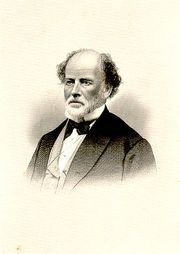
Matthew Fontaine Maury born January 14, 1806 , died February 1, 1873
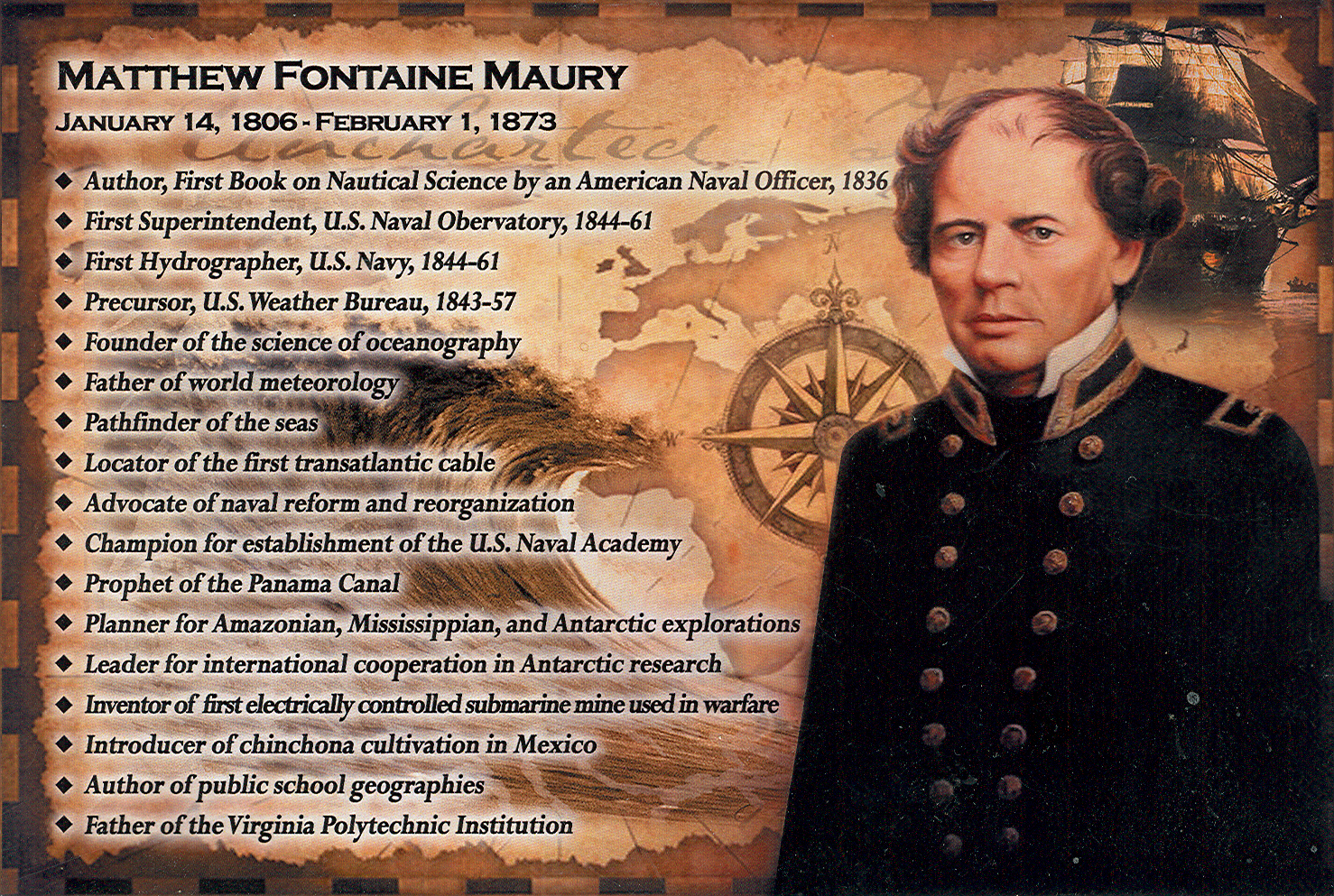
American astronomer, astrophysicist, historian, oceanographer, metorologist, cartographer, author, geologist and educator
He was
nicknamed PATHFINDER of the SEAS and FATHER of modern Oceanography and
Naval Meteorology and later Scientist of the Seas, due to the
publication of his extensive works
in books, especially Physical Geography of the Sea 1855, the first
extensive
and comprehensive book on oceanography published. Maury made many
important
new contributions to charting winds and ocean currents, including
pathways
for ships at sea.
His hard work on and love of plotting the oceans paid off when he became superintendant of the Department of Charts and Instruments in 1842, mostly due to his articles on United States Naval reform published in newspapers. Upon the establishment of the Untited States Naval Observatory in 1844 thatnks to President John Q. Adams in his last months of office, Lieutenant Maury became its first superintendant, holding that position until his resignation in April 1861.
Lieutenant Maury published his Wind and Current Chart of the North Atlantic, which showed sailors how to use the ocean's currents and winds to their advantage and drastically reduce the length of ocean voyages; his Sailing Directions and Physical Geography of the Seas and its Meterology remain standard. Maury's uniform system of recording synoptic oceanographic data was adopted by the Navies and merchant marines around the world and was used to develop charts for all major trade routes.
Thus the United States Navy created and built surveying ships to carry on the work of Maury. To chart wind currents, water temperatures and underwater obsticles to produce the many maps and charts used today by the Navy and Merchant Marine.
His hard work on and love of plotting the oceans paid off when he became superintendant of the Department of Charts and Instruments in 1842, mostly due to his articles on United States Naval reform published in newspapers. Upon the establishment of the Untited States Naval Observatory in 1844 thatnks to President John Q. Adams in his last months of office, Lieutenant Maury became its first superintendant, holding that position until his resignation in April 1861.
Lieutenant Maury published his Wind and Current Chart of the North Atlantic, which showed sailors how to use the ocean's currents and winds to their advantage and drastically reduce the length of ocean voyages; his Sailing Directions and Physical Geography of the Seas and its Meterology remain standard. Maury's uniform system of recording synoptic oceanographic data was adopted by the Navies and merchant marines around the world and was used to develop charts for all major trade routes.
Thus the United States Navy created and built surveying ships to carry on the work of Maury. To chart wind currents, water temperatures and underwater obsticles to produce the many maps and charts used today by the Navy and Merchant Marine.
Information compliled from
Wikipedia
This is the first ship that the Navy
actually built to do the job of Hydrographic Surveying USS Pathfinder
AGS1
These Ships were at the time the most modern Hydrographic Survey Ships that the US Navy had its disposal
USS Tanner AGS15 USS Maury AGS16 USS Pursuit AGS17 USS Requisite AGS18 USS Shelldrake AGS19
USS Allegheny ATA179 USS Prevail AGS20 USS Serrano AGS24 USS Stallion ATA193
These Ships were at the time the most modern Hydrographic Survey Ships that the US Navy had its disposal
USS Tanner AGS15 USS Maury AGS16 USS Pursuit AGS17 USS Requisite AGS18 USS Shelldrake AGS19
USS Allegheny ATA179 USS Prevail AGS20 USS Serrano AGS24 USS Stallion ATA193
These
are two of the seven new Hydrographic Survey Ships Under
the
command of the
Military Sealift Command
Military Sealift Command